


Rising temperatures, erratic rainfall, and shifting seasons are severely impacting crop yields
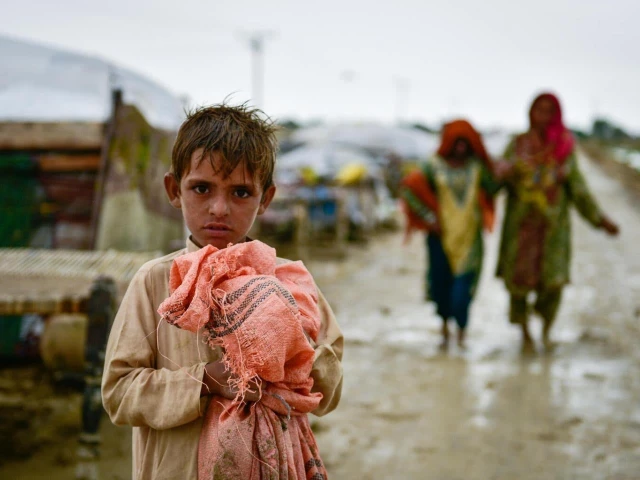
Pakistan is one of the most vulnerable country due to extreme weather and climate change. PHOTO: UNICEF PAKISTAN
LAHORE:
Punjab is called the food basket of Pakistan. Major crops such as wheat, rice, sugarcane, maize, and cotton are grown here. However, over the past 15 to 20 years, Punjab’s climate has changed rapidly. Rainfall patterns have become irregular, heat has intensified, and winters are becoming shorter and less cold, putting farmers under stress and significantly reducing crop yields.
According to seasonal outlook reports from the Pakistan Meteorological Department, the average temperature in Punjab has been rising since 2000, while rainfall has become unpredictable. Heat intensity and duration have increased, and winters have shortened, disrupting the natural crop cycles.
Research by the University of Agriculture Faisalabad and the Pakistan Agricultural Research Council shows that rising temperatures are shortening the growth period of crops. The study indicates that an increase of 1 to 4 degrees Celsius could reduce wheat production by 9 per cent to 30 per cent.
According to the International Food Policy Research Institute, more than 80 per cent of farmers in Punjab are experiencing the effects of climate change. Rainfall patterns in central Punjab have become unstable, with some years seeing heavy rains and others facing severe drought. Unexpected rains in April have affected wheat harvesting, while heavy rains in July and August pose risks to cotton and rice crops.
Dr Anjum Ali, Executive Member of the Punjab Agriculture Research Board, said that climate change in Punjab has now taken the form of a “climate shift,” where the traditional monsoon cycle has changed and rainfall is occurring in shorter but more intense periods. He added that changing temperature and rainfall patterns are also altering cropping trends, especially in central Punjab, where water-intensive crops like sugarcane, rice, and maize are increasing, while cotton cultivation is declining.
To address these challenges, several changes are being introduced in the agricultural system. Short-duration seed varieties, modern breeding programs, and the use of micronutrients and potash are being promoted to help crops withstand harsh climatic conditions. He also noted that pest attacks are increasing due to higher temperatures accelerating their reproduction.
Dr Buttar recommended promoting digital agriculture, providing farmers with timely information, and adopting cluster farming models. He also emphasized the need for better water management, storage infrastructure, and investment in research and development.
Read More: Climate funds ignore vulnerable
On the other hand, progressive farmer Aamir Hayat Bhandara said that climate change has severely affected sowing and harvesting times. Unexpected rains in March and April delay wheat harvesting, affecting yields. Similarly, sudden temperature increases cause crops to ripen prematurely, increasing the risk of reduced production.
“Heatwaves, floods, and droughts together are disrupting the agricultural system. Year-to-year temperature fluctuations are becoming more noticeable, affecting the entire crop growth cycle. Farmers must adjust crop selection and planting schedules according to climate risks. At the same time, the government should provide financial protection, access to climate information, and modern agricultural technologies,” said Bhandara.
Khalid Mahmood Khokhar, President of Pakistan Kisan Ittehad, stated that climate change has already caused farmers losses worth billions of rupees. He warned that if immediate action is not taken, farmers may stop cultivating wheat next year. “Climate change has devastated us. The government is spending billions of dollars on imports while ignoring local farmers.”