


Musk seeks $150b in damages, claims Altman betrayed OpenAI’s mission by turning it into ‘wealth machine’ for investors
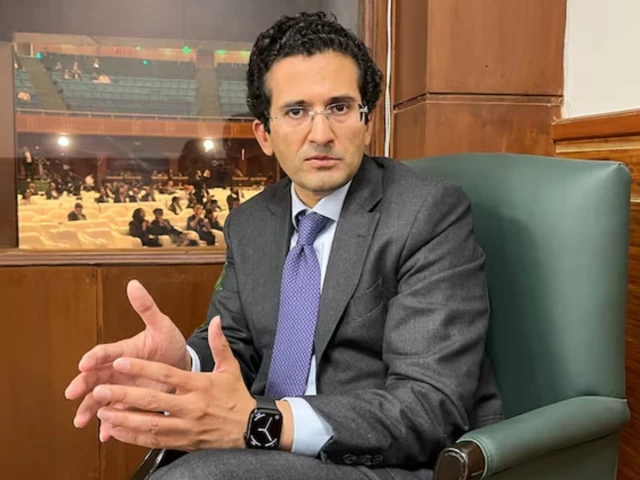
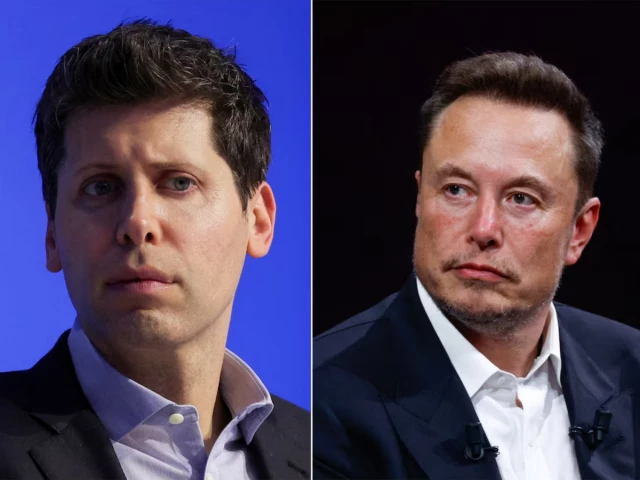
A combination image shows Sam Altman, CEO of OpenAI, during the Asia-Pacific Economic Cooperation (APEC) CEO Summit in San Francisco, California, U.S., on November 16, 2023 and Elon Musk, Chief Executive Officer of SpaceX and Tesla and owner of X, formerly known as Twitter during Viva Technology conference dedicated to innovation and startups at the Porte de Versailles exhibition centre in Paris, France, June 16, 2023. PHOTO: REUTERS
A trial that could help shape the future of artificial intelligence begins on Tuesday, with billionaires Elon Musk and Sam Altman at odds over the evolution of ChatGPT maker OpenAI from a nonprofit to a profit-seeking juggernaut worth hundreds of billions of dollars.
Opening statements in Musk’s civil lawsuit against OpenAI and Altman will take place in the Oakland, California, federal court, following the selection on Monday of nine jurors.
Musk claims that Altman and Greg Brockman, respectively OpenAI’s chief executive and president, betrayed him and the public by abandoning the company’s mission to be a benevolent steward of AI for the benefit of humanity, and turning it into a “wealth machine” for themselves and investors.
The world’s richest person is seeking $150 billion in damages from OpenAI and Microsoft, one of its largest investors, with proceeds going to OpenAI’s charitable arm. He also wants OpenAI to revert to a nonprofit, with Altman and Brockman removed as officers and Altman removed from its board.
Read: Google signs classified AI deal with Pentagon, The Information reports
Musk, the Tesla and SpaceX founder, has said he provided about $38 million of seed money to OpenAI for its original mission, only to see OpenAI create a for-profit entity in March 2019, a little over a year after he left its board. OpenAI countered that Musk knew about and supported the transformation, and sued only after failing to become CEO, and starting his own AI company to stunt its growth.
Musk is no longer seeking damages for himself as he pursues breach of charitable trust and unjust enrichment claims.
US District Judge Yvonne Gonzalez Rogers has said she wants jurors to begin deliberations on the defendants’ liability by May 12. The jurors include nurses, city workers and retirees. If they find the defendants liable, both sides will argue possible remedies to the judge.
Musk, Altman and Microsoft chief Satya Nadella are among the witnesses expected to testify, with Musk taking the stand as soon as this week.
Egos and personalities
Musk and Altman co-founded OpenAI in 2015 to develop AI to benefit humanity and fend off rivals such as Google.
The trial could offer a window into some of the egos and personalities that shaped OpenAI as it evolved from a nonprofit research lab in Brockman’s apartment to a company worth more than $850 billion. It risks complicating OpenAI’s plans for a potential initial public offering by casting doubt on its leadership, and could also intensify Americans’ fears about AI technology more broadly.
Read more: Microsoft CEO warns AI could stall without global economic impact
OpenAI has argued that Musk was motivated by jealousy in trying to undermine its growth and prop up his own xAI, which he founded in 2023 shortly after OpenAI launched ChatGPT. It has been said that Musk was involved in discussions to create OpenAI’s new structure and demanded to be CEO.
Microsoft has denied having colluded with OpenAI and says it teamed up with OpenAI only after Musk left.
OpenAI faces growing competition from rivals, including Anthropic, and is spending billions on computational resources. A potential IPO could value the company at $1 trillion, Reuters has reported.
Musk’s xAI trails far behind OpenAI in usage. He has folded that business into his rocket company SpaceX, whose own potential IPO this year could be the largest ever.
Last fall, OpenAI overhauled its structure again to become a public benefit corporation, in which the nonprofit and other investors including Microsoft hold stakes. The nonprofit holds a 26% stake, plus warrants if OpenAI hits certain valuation targets. A public benefit corporation could make OpenAI more investor-friendly while retaining its charitable origins.