

Stakeholders raise concerns over inefficiencies while officials highlight progress, ongoing improvements
HYDERABAD:
Participants in a stakeholder workshop on the Sindh Water and Agriculture Transformation (SWAT) project on Saturday highlighted both achievements and shortcomings in the province’s irrigation and water management system, with farmers raising concerns over inefficiencies while officials pointed to ongoing reforms.
The session was attended by officials, development partners and farmer representatives who reviewed progress under the project aimed at improving agricultural productivity through better water use.
Chairman of the Sindh Irrigation and Drainage Authority (SIDA) Qabool Muhammad Khatiyan said the initiative should go beyond productivity targets to include water conservation and pollution control, alongside reducing water consumption in agriculture.
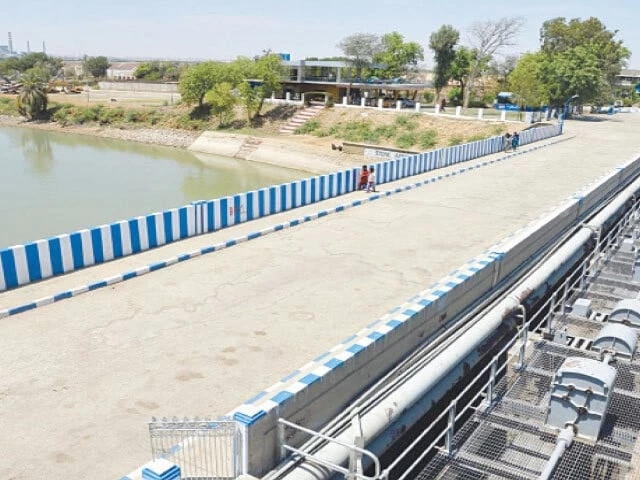
He acknowledged irrigation development work carried out by the Sindh government, including the rehabilitation of the Phuleli Canal and its distributaries, which has reportedly increased its capacity to 20,000 cusecs. He said improved water delivery to tail-end areas has helped bring around 400,000 acres of barren land under cultivation and boosted rice and other crop production by 60 per cent.
World Bank Task Team Leader Françis Onimus said the core objective of the SWAT project is to achieve higher agricultural productivity with lower water usage, stressing efficiency as the key focus.
Project Director Jamal Mangan said rehabilitation work on the Akram Canal, one of the four canals originating from the Kotri Barrage, has been delayed due to design revisions by consultants. He added that tenders have now been opened and a decision is expected within a week, noting that such infrastructure projects are long-term and must be executed carefully to avoid failure.
SIDA Project Coordinator Nazir Essani said three years into the project, visible progress on some components remains limited, though key preparatory work – including feasibility studies, design finalisation, training programmes and hydro-agro informatics systems – has been completed.