
Deputy minister Khatibzadeh says Hormuz to remain open but new rules may apply on sidelines of Antalya Diplomacy Forum
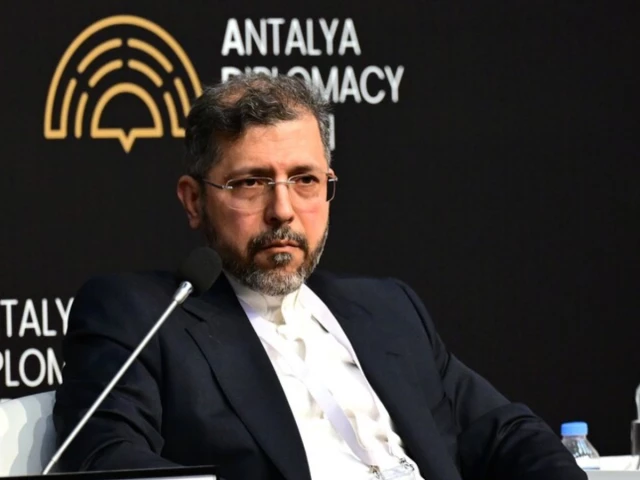
Hormuz to remain open but new rules may apply, says Deputy Foreign Minister Khatibzadeh on sidelines of Antalya Diplomacy Forum. PHOTO: ANADOLU
Iran’s Deputy Foreign Minister Saeed Khatibzadeh said Tehran rejects any temporary ceasefire and is seeking a comprehensive end to the war across the region.
Speaking to reporters on the sidelines of the Antalya Diplomacy Forum, Khatibzadeh said any ceasefire must include all conflict zones “from Lebanon to the Red Sea,” describing it as a “red line” for Iran.
“We are not accepting any temporary ceasefire,” he said, adding that the cycle of conflict “should end here once and for all.”
Khatibzadeh said Pakistan’s mediation aims to achieve that goal.
On the Strait of Hormuz, he said the waterway has historically remained open, noting that it lies within Iran’s territorial waters but has long been accessible.
Also Read: Trump says Iran war should end ‘soon’, says Hezbollah should support truce
He accused the US and Israel of triggering instability in the region, saying their actions have negatively affected global trade and the wider economy.
Khatibzadeh said Iran remains committed to keeping the Strait open, but indicated that new arrangements could be introduced in light of the current situation, including considerations related to security, safe passage and environmental concerns.
He added that a lasting resolution to the conflict, along with what he described as a shift away from “maximalist positions” by the US, would ensure that the Strait of Hormuz remains a stable route for global commerce.
Read More: Iran slams ‘one-sided’ UN draft, labels US sanctions ‘economic terrorism’
Chief of Defence Forces (CDF) and Chief of the Army Staff Field Marshal Asim Munir met with Iranian Parliament Speaker Mohammad Bagher Ghalibaf in Tehran on Thursday, PressTV reported on X.
The discussions were linked to ongoing negotiations with the US, state-run IRIB reported. The consultations included planning for a possible new round of talks between Iran and the US, as well as “to convey messages from Washington”, the report said.
Tehran “would decide on the next phase of negotiations” with the US following the meetings with the Pakistani delegation, the report said.
Iranian media said he also held a meeting with Khatam Al-Anbiya Central Headquarters Commander Major General Ali Abdollahi.
As per IRNA, he “presented a report on the measures he has taken within the framework of ending the war as well as his talks in Tehran, and stressed the continuation of these efforts”.
CDF Munir stressed the need to continue mediation efforts, while the Iranian commander expressed appreciation for what he described as Pakistan’s “supportive” stance during the conflict.
Abdollahi said the outbreak of hostilities stemmed from a “miscalculation” by adversaries regarding Iran’s public support and the capabilities of its armed forces.
He also highlighted domestic backing for Iran’s military, saying the equipment used during the war was domestically produced and that the armed forces remain prepared for “comprehensive defence” in case of further escalation.
Officials accompanying CDF Munir also held separate talks with Iranian counterparts to discuss regional developments and bilateral cooperation.