


LAHORE:
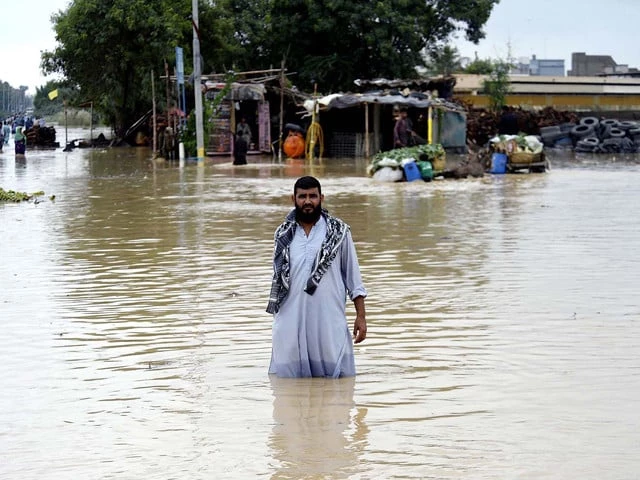
Authorities in Punjab have stepped up flood preparedness efforts ahead of the monsoon season, staging emergency drills while renewed attention turns to hard lessons from last year’s devastation.
Rescue 1122 conducted mock exercises at a district site under directives from the Emergency Services Department. Officials said the exercises were designed to test coordination and readiness in the event of a flood emergency. Participants demonstrated water rescue techniques, CPR and first aid procedures, while emergency teams received briefings on the use of equipment.
The drills brought together agencies including the Punjab Health Department, Livestock Department, district administration and community emergency response teams – a coordinated approach authorities say is critical in crisis situations.
“The objective is to ensure timely and effective response through better inter-agency coordination,” Lahore Deputy Commissioner Ali Ejaz said, expressing satisfaction with the preparedness on display.
For now, weather conditions remain largely stable. According to the forecast issued Wednesday, most parts of the country are expected to experience hot and dry conditions, with temperatures climbing in southern regions. Isolated rain and thunderstorms are likely in upper Khyber-Pakhtunkhwa, Gilgit-Baltistan and Kashmir through Thursday.
Over the past 24 hours, scattered rain-windstorms were recorded in parts of Kashmir and upper Khyber Pakhtunkhwa, with lighter precipitation reported in upper and central Punjab. Elsewhere, conditions remained hot and dry, with temperatures peaking at 46°C in Turbat and Shaheed Benazirabad.
Still, officials and experts warn that early preparedness is crucial, particularly in light of findings from the Flood Forecasting Division’s 2025 report, which described last year’s monsoon season as a complex and cascading disaster rather than a single extreme event.
The report pointed to a combination of intense rainfall systems, glacial melt driven by high temperatures and synchronised water releases from upstream reservoirs as key factors behind prolonged and severe flooding. In some areas, exceptionally high flood levels persisted for up to two weeks.
It also exposed critical gaps in forecasting and response systems – most notably the lack of real-time transboundary water data, which forced authorities to rely on estimates during peak flood periods, increasing uncertainty in predictions.
Among its key recommendations, the report called for the development of a unified national flood forecasting model that integrates rainfall, snowmelt and reservoir operations. It also urged expansion of radar and satellite monitoring systems, modernisation of river gauge networks and a shift toward impact-based forecasting that links weather events directly to risks for specific communities and infrastructure.
Equally important, the report emphasised the need to improve public and institutional understanding of flood dynamics, noting that disasters are increasingly driven by a combination of meteorological, hydrological and human factors.
The renewed focus on preparedness drills appears to reflect those lessons. Officials say strengthening coordination, improving forecasting tools and investing in infrastructure will be essential to managing future risks.
The officials said the warning signs from last year’s floods continue to shape how authorities prepare for the monsoon.