
.
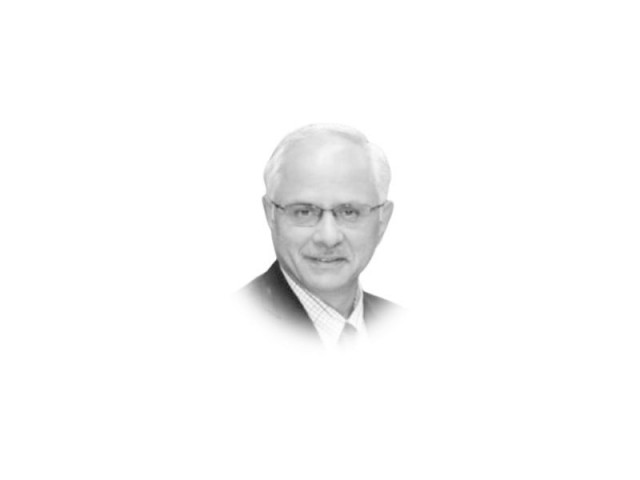
The writer is Provost, University of Management and Technology (UMT), Lahore. He can be contacted at s.m.asghar.zaidi@gmail.com
Pakistan’s crises are often described in economic, political or institutional terms. Yet beneath these visible failures lies a deeper erosion: the weakening of truth, trust and integrity in public life. Societies do not decline only when economies falter; they decline when promises lose meaning, institutions cease to inspire confidence, and education produces credentialled graduates without character.
At a time when technological disruption and economic uncertainty are reshaping the world, many young people are asking fundamental questions: what is education ultimately for? Is it merely a pathway to employment and status? Or must it also form human beings capable of wisdom, stewardship and ethical leadership? These questions have become especially relevent for Pakistan’s universities.
For Muslim societies, the Quran offers a profound framework for addressing this challenge through the concept of covenant – ahd.
The Quran commands believers: “O you who believe, fulfil your covenants.”
This is not merely an instruction for ritual observance. It is a moral philosophy rooted in responsibility, integrity and accountability – one that extends from the intimate covenant of the believer with Allah into every dimension of business of life. Scholars such as Muhammad Khalid Masud have long argued that covenant lies at the very centre of Islamic moral thought, while legal scholars including Ahmer Bilal Soofi have shown how Quranic covenantal thinking can illuminate modern institutional responsibilities.
The Quran repeatedly affirms that human beings have been honoured by Allah with intellect, agency and moral choice. These are not gifts without obligation. They carry the expectation that knowledge will be used responsibly, that justice will be upheld, and that human life will be directed towards the well-being of society at large.
Seen through this lens, education becomes far more than the transmission of information or professional skills. It becomes part of a moral covenant. Universities cannot remain institutions concerned only with competence and economic advancement. They must become communities where knowledge, character, good manners and service to humanity are cultivated together.
This understanding is powerfully illuminated by the life and example of Prophet Muhammad (peace be upon him). Long before prophethood, he was known throughout Makkah as Al-Sadiq and Al-Ameen i.e. the truthful and the trustworthy. These were not incidental attributes. They were the very foundation of his moral authority and his capacity to lead. Trust preceded authority. Character preceded power.
The teaching of the Holy Prophet (peace be upon him) remains as relevant as ever: “The best amongst you are those who are best in character, having good manners.” This is not a counsel of personal piety alone. It is a vision of leadership – one in which excellence of character is the indispensable condition for excellence in every other domain of life.
Modern societies often place excessive emphasis on competence while neglecting the cultivation of trustworthiness and integrity. Yet no institution, whether government, business, academia or media, can sustain legitimacy when truth becomes negotiable and trust collapses. The erosion of truthfulness and trustworthiness is ultimately the erosion of societal cohesion itself. As Klaus Schwab has recently observed in his Intelligent Age series, the twin crises of truth and trust represent perhaps the most urgent civilisational challenge facing societies today. Pakistan is no exception and its universities bear a particular responsibility in responding.
The crisis facing many Pakistani educational institutions today is therefore not simply academic decline. It is the weakening of character formation. Too often, learning has become a narrowly transactional affair: a race for grades, credentials and employment.
This is precisely the challenge that a Quranic understanding of covenant places before universities. When students recognise their lives as part of a covenant with Allah (i.e. a covenant of accountability, responsibility and purposeful stewardship), education is transformed from a transaction into a journey of personal and moral formation. Knowledge, character and purpose develop together rather than in isolation.
Such transformation requires teachers who embody intellectual honesty, curricula that reconnect knowledge with ethics, and institutional leaders willing to prioritise character-building and societal contribution over prestige and rankings alone.
The highest measure of an institution should not be the career destinations of its graduates, but the quality of human beings it helps to form. Important in this context are five values – truthfulness, trustworthiness, humility, integrity and striving – grounded in the deepest traditions of Islamic moral thought.
Importantly, these values resonate far beyond explicitly religious settings. The greatest traditions of modern scholarship themselves rest upon honesty and integrity. Scientific discovery requires truthfulness. Research depends upon trust. Innovation without ethics can become destructive. The moral foundations embedded in the Quranic covenant align naturally with the finest ideals of serious universities everywhere.
For Pakistan, this question carries national significance. The vision behind the creation of Pakistan was never merely territorial or administrative. It reflected the aspiration for a society in which Muslims could organise collective life in accordance with principles of justice, responsibility and human dignity rooted in Islamic values. If universities continue producing graduates without such moral direction, Pakistan may gain technical expertise while losing its ethical foundations.
Character-driven graduates carry amanah (moral responsibility) into the wider society, and it is precisely this quality of stewardship that Pakistan’s institutions urgently need. Only such character-driven leadership can help Pakistan rebuild institutions worthy of trust, and move closer to the higher moral promise upon which this nation was founded.