
Resolution calls for independent inquiry into recent violence, relief for victims and reforms to prevent future unrest
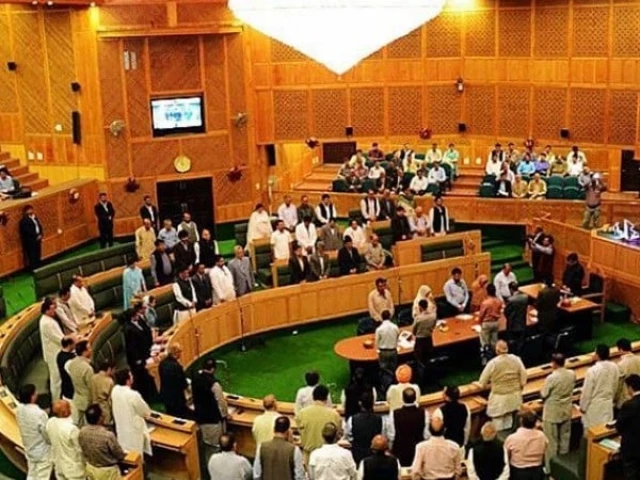
The Azad Jammu and Kashmir (AJK) Legislative Assembly on Thursday passed a resolution calling for the establishment of an independent Truth Commission to investigate the recent unrest, examine all deaths, injuries and property losses, and recommend relief and reforms.
The resolution comes after clashes were reported between law enforcement personnel and the proscribed Joint Awami Action Committee (JAAC) protesters in Rawalakot, with reports of multiple deaths and injuries circulating on social media. Both security forces and the JAAC claimed the loss of lives.
Announcing the development on X, Pakistan Peoples Party Chairman Bilawal Bhutto Zardari said the resolution sought to “end the ongoing crisis and provide immediate relief to the people of Kashmir.”
“It is unfortunate that on such an important occasion the only PML-N MLA in attendance not only did not vote for the resolution but instead attempted to disrupt its passage through protests and calling quorum,” he added.
The AJK Assembly today passed a resolution calling for the establishment of a truth commission to end the ongoing crisis and provide immediate relief to the people of Kashmir. 1/2 🧵 pic.twitter.com/JKaBfuJePF
— Bilawal Bhutto Zardari (@BBhuttoZardari) July 30, 2026
The resolution was centred around the proposal to establish an “independent, impartial and suitably empowered” Truth Commission as an institutional mechanism for the peaceful and lasting resolution of the present crisis.
Under the proposal, the federal government and representatives of the protest leadership would jointly endorse the commission’s composition, terms of reference, scope and procedure in writing, following which the AJK government would establish the commission without delay under the applicable law.
The resolution said the commission would investigate the causes and consequences of the recent unrest, including all deaths, injuries, property losses and allegations relating to violence or the use of weapons, “without any predetermined conclusion.” It added that every affected family and every relevant party would be given a fair opportunity to present its account and evidence.
According to the resolution, the commission would be granted access to all relevant official records, including government documents, FIRs, videos, forensic evidence, weapons, communications and witness testimony. It also stated that sensitive material concerning national security, privacy or witness protection could be examined through confidential or in-camera proceedings where necessary.
The resolution made clear that the commission would not determine criminal guilt or innocence, nor impose punishment. Where its findings warranted further legal action, it could refer matters to the competent investigative, prosecutorial or judicial authorities. Before making any adverse finding against an individual or institution, the commission would be required to provide notice and a fair opportunity to respond.
It further proposed that the commission submit interim and final reports within agreed timelines. Subject to lawful protections relating to national security, privacy and witness safety, its final report would be made public. The commission could also recommend humanitarian relief, compensation, institutional reforms, legal proceedings and measures to prevent similar incidents from recurring.
The Assembly proposed that the joint endorsement of the commission should be accompanied by an immediate end to protests and simultaneous de-escalation. It said the AJK government should restore roads, emergency and medical access, essential supplies, communications, mobile and internet services, and normal civic and economic activity without delay.
It also proposed that protesting parties commit not to resume demonstrations until the commission completed its work, while the governments of AJK and Pakistan would pause further action related to the crisis during the inquiry, except where lawful action was required to address a specific and imminent threat to life or public safety.
Read: Bilawal calls on govt, protesters to form truth commission over AJK unrest
The resolution reaffirmed that the AJK Legislative Assembly represented state stability, the protection of life and property, democratic values and the supremacy of the Constitution and law. It said the prevailing circumstances required “restraint, prudence, responsibility and national unity” from state institutions, elected representatives, political leaders and the public.
It paid tribute to members of the security forces, police and law enforcement agencies who lost their lives while performing their duties, while also acknowledging the suffering of civilians affected by the unrest. The House expressed grief over the deaths and injuries of civilians, security personnel and police officials and stated that every affected family should have an equal opportunity to present evidence, seek truth and justice, and receive humanitarian assistance and relief without any presumption of legal responsibility.
The Assembly reiterated that peaceful protest, freedom of expression and the presentation of legitimate political, economic, administrative and social demands were constitutional and democratic rights that “the state shall fully respect.” At the same time, it stressed that “arms, violence, vandalism, threats, incitement and violations of law cannot be regarded as acceptable means of any political or democratic struggle.”
The resolution appealed to peaceful protesters, political workers, traders and young people to completely distance themselves from “armed, violent, subversive and law-breaking elements.”
It further emphasised, “A clear distinction shall be maintained between peaceful protesters and persons shown by verifiable evidence to have engaged in armed violence or violations of law. Responsibility shall be determined individually, on the basis of evidence and through lawful process.”
It also urged the public to discourage any individual or group found, on the basis of verifiable evidence, to be promoting violence, incitement, vandalism or disorder, while calling on the government and law enforcement agencies to restore peace and order without discrimination and strictly in accordance with the Constitution and law.
The House further said, “The purpose of the State is not vengeance but the enforcement of law, protection of the people, restoration of peace, and re-establishment of the writ of the State.”
The resolution reiterated that no individual, political party, organisation or group should be allowed to challenge the writ of the State through force, arms, threats or violence, nor should anyone take the law into their own hands.
The Assembly demanded that all arrested persons, accused individuals and those under investigation be dealt with in accordance with constitutional guarantees, transparent investigations, fair trial standards and judicial requirements.
The House reaffirmed that the future of AJK was linked to peace, democracy, constitutional governance, transparent elections and the power of the vote. It said legitimate political, economic, administrative and social demands should be addressed through dialogue, mutual consultation and constitutional procedures.
Read More: Mushtaq Ahmad released after alleged detention while travelling to AJK
The resolution further declared that the “success of any political movement or public struggle lies only through constitutional methods, transparent elections, public confidence and democratic processes. It appeals to the Government, the Opposition, elected representatives, civil society, the business community, the youth and the people of Azad Jammu and Kashmir to unite for the stability of the State, the protection of its citizens, and the supremacy of the Constitution and the law.”
It also assured the people that “their legitimate demands will not be ignored and that the doors to negotiation will remain open,” while making clear that there could be no compromise on the protection of citizens’ lives and property, public and private assets, or state institutions.
In conclusion, the Assembly reaffirmed its commitment to protecting peace, democracy, the Constitution, the rule of law and public rights, while condemning every act involving armed violence, disorder or violations of law.
It clarified that nothing contained in the resolution should be construed as a finding of fact or legal responsibility against any individual, group or institution, with such matters to be determined only through the proposed Truth Commission and the competent judicial authorities.
The idea of a Truth Commission was first put forward by Bilawal on July 16, when he described the situation in AJK as “a national tragedy” and proposed an independent body to examine the unrest, establish the facts, hear the grievances of all stakeholders and recommend a lasting political solution.
He argued that every reported death should be investigated “diligently, impartially and according to due process”, warning that continued confrontation would only lead to further bloodshed and deepen the crisis. He urged both the government and protesters to suspend confrontation if the commission was established, saying the issue could only be resolved through dialogue rather than force.
Bilawal revived the proposal following the first phase of the AJK elections on July 27, insisting that the commission remained the only viable path to restoring public confidence and preventing further violence.
He maintained that an independent inquiry could have averted the recent loss of life, urged authorities not to punish protesters indiscriminately, and argued that responsibility should be determined through an impartial investigation. “This issue cannot be resolved on the street,” he said, adding that both the state and the protesters needed to accept the commission’s findings if lasting peace was to be achieved.
Clashes in AJK
The clashes in AJK have drawn widespread condemnation from political parties and rights groups following reports of deaths and injuries during protests.
The Human Rights Commission of Pakistan said it was “deeply alarmed” by the reports, stressing that maintaining public order “must never come at the expense of the right to life or the freedoms of peaceful assembly and expression.” It called for a “prompt, impartial and independent investigation” into the reported deaths and injuries.
Opposition parties also condemned the violence. PTI demanded an “immediate, independent, transparent and impartial judicial investigation,” describing the reported deaths and injuries as an attack on “human rights, democratic values and civil liberties.”
TTAP denounced what it called the use of “excessive force” against protesters, while Jamiat Ulema-e-Islam-Fazl chief Maulana Fazlur Rehman described the firing on civilians as “open terrorism.”
AJK’s 53-member legislative assembly includes 12 seats reserved for Kashmiri refugees — people who fled Indian Illegally Occupied Jammu and Kashmir (IIOJK) in 1947 and 1965 and are now scattered across Pakistan. Six seats represent refugees from the Jammu division (~434,000 people) and six from the Kashmir Valley (~30,000 people) — an already lopsided arrangement that many see as unfair.
The region witnessed one of its most turbulent periods in October last year when protests led by the JAAC erupted over demands for constitutional and governance reforms. At least nine people, including three policemen, were killed during the unrest.
The JAAC, which organised the protests and strike, had presented a wide-ranging charter of demands, including an end to the privileges enjoyed by the ruling elite, the abolition of 12 assembly seats reserved for refugees, and the scrapping of the quota system.
Two days after the violence, the government and the JAAC reached an agreement covering 12 core and 13 additional points. Under the accord, both sides agreed to constitute a high-level committee to examine the issue of refugee seats in the AJK Legislative Assembly.
The matter is at a deadlock at the moment, with the JAAC calling for the abolition of the seats while the government rejects the demand.