The agreement would extend a tenuous ceasefire announced in April by another 60 days and reopen the Strait of Hormuz
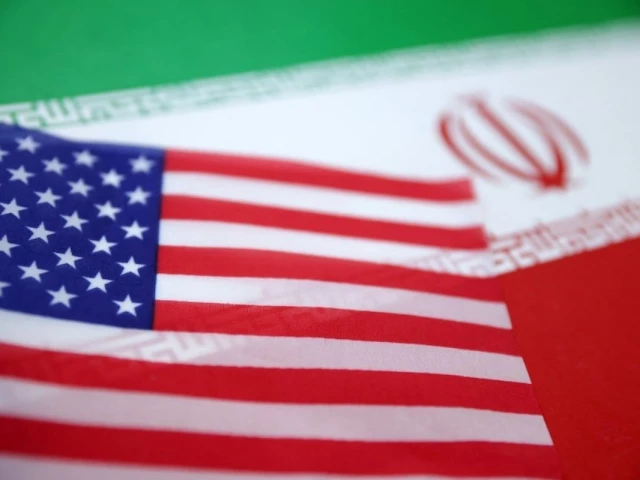
US and Iran flags are seen in this illustration taken June 18, 2025. REUTERS
US President Donald Trump said on Monday a preliminary agreement to end the US-Israel war on Iran has been signed by the US and Iran, though details have yet to be made public, and both countries said a permanent truce is yet to be negotiated.
The agreement would extend a tenuous ceasefire announced in April by another 60 days and reopen the Strait of Hormuz, which Iran has effectively blocked since the US and Israel attacked Iran in February.
Negotiators would address difficult issues like the future of Iran’s nuclear program during the next phase.
“The deal’s all signed,” Trump said after he arrived in France for a summit of the G7 group of big economies. He said Vice President JD Vance would attend a formal signing ceremony in Geneva on Friday.
Read: US, Iran reach preliminary agreement to end war, signing set for Friday
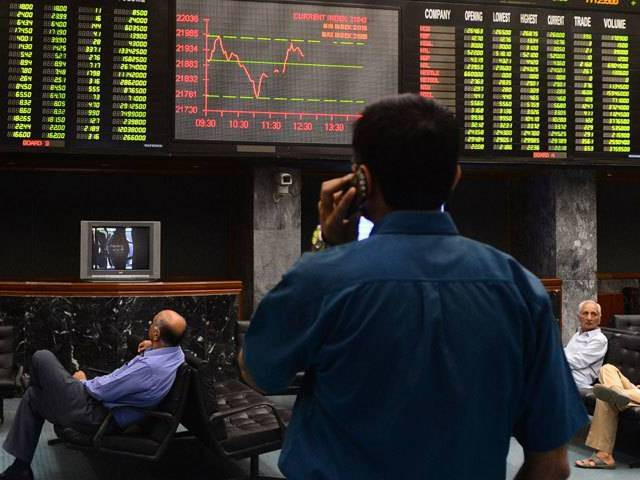
Oil prices fell to their lowest level since March 10, shortly after the blockade of the Strait of Hormuz, a narrow waterway between Iran and Oman, cut off one-fifth of the world’s oil trade.
The deal is the most significant step yet to resolve the conflict, which has killed at least 7,000 people, mostly in Iran and Lebanon, and upended global energy markets.
But much about the agreement remains unknown, and whether its provisions differ from the April ceasefire was unclear.
Iranian President Masoud Pezeshkian wrote on social media that the US-Iran memorandum of understanding was an “important step” toward stopping the fighting but noted a final agreement for a lasting truce “has yet to take shape.”
Vance told CNN that the signed memorandum was only about 1-1/2 pages “and so it is a very general document.” Details will be released over the next two days, US officials said. Vance said it included “a very significant sanctions relief package” for Iran.
US and Iranian officials say it could eventually deliver substantial economic benefits to Iran by lifting sanctions, unfreezing foreign assets and setting up a $300 billion reconstruction fund, paid for by neighbouring Gulf states, which host US military bases.
US officials, speaking on condition of anonymity, said Iran would have to satisfy US demands never to build a nuclear weapon and cut off support for militias like Hezbollah in Lebanon to get those benefits.
Iran agreed to sharply curtail its nuclear program in a deal signed in 2015 with the US and other countries. Trump withdrew the US from that accord during his first term as president. That agreement allowed Iran to regain billions of dollars in frozen assets, which Trump has frequently derided as sending “pallets of cash” to Iran.
Trump appears to have achieved little of what he said he intended when he launched strikes on Iran with Israel on February 28. Iran’s government remains in place, while his demands that Iran dismantle its ballistic missile program and end support for regional militias like Hezbollah remain unmet.
The new agreement also does not resolve the fate of Iran’s stockpile of enriched uranium, which Trump says he wants destroyed or removed. The agreement does stipulate that the 60 days after signing is the period to negotiate details about Iran’s nuclear promises.
Iranian officials, who have always denied intending to build a nuclear weapon, say they have given up little by agreeing to resume the diplomatic discussions with Trump officials over the nuclear program that were interrupted in February by Trump’s decision to launch the war.
While the latest agreement lifts Iran’s barring of the Strait of Hormuz, that only restores the prewar status quo, and shippers say traffic will only restart once safety is assured.
Iran has suggested it will retain control with Oman over the strait. The US said the strait will be open toll-free for 60 days, and it would expect that provision to be part of a final agreement as well.
US-Iran pact welcomed by 17 countries, all urge reopening of Strait of Hormuz
A group of 17 countries on Monday welcomed the memorandum of understanding announced between the US and Iran, describing it as an opportunity to restore regional stability and support the global economy.
“This is a moment of opportunity to restore regional stability and stabilise the global economy,” a joint statement by the UK, France, Germany and Italy read. The statement was later signed by 13 other countries.
They congratulated the US, Iran and mediators including Pakistan and Qatar on what they called a diplomatic breakthrough.
The leaders stressed that detailed negotiations should be concluded and the agreement implemented “rapidly and comprehensively,” adding that they stand ready to support the process.
They also called for the urgent reopening of the Strait of Hormuz and the restoration of “unconditional and unrestricted freedom of navigation.”
The other signatories of the statement were Japan, Canada, Australia, Belgium, Bulgaria, the Greek Cypriot Administration, the Dominican Republic, Estonia, Finland, Greece, Latvia, Poland and Portugal.
The leaders said they were committed to contributing to that effort, including through “a strictly defensive and independent mission” aimed at reassuring commercial shipping and conducting mine-clearance operations, in accordance with their respective constitutional requirements.
The statement reiterated that Iran “must never acquire a nuclear weapon” and expressed readiness to work with the US, Iran and the International Atomic Energy Agency (IAEA) toward that objective.
The leaders also said they were prepared to lift relevant sanctions in response to “clear, verifiable steps” by Iran regarding its nuclear program.
They pledged to work closely with the US, Iran and regional partners to maintain momentum and achieve a long-term diplomatic settlement.
It further reaffirmed support for the stability, sovereignty and territorial integrity of Lebanon and underscored the importance of a robust ceasefire.
Trump dismisses Iran payout claims as Vance points to $300B Gulf-led fund
US President Donald Trump on Monday rejected claims that Washington is providing financial payouts to Iran, labeling reports of American funding as “fake news” amid reports of a multi-billion dollar reconstruction package.
“The story that the US is paying Iran 300 million dollars is fake news,” Trump asserted on his social media platform Truth Social.
While he cited a “300 million” figure, it remained unclear if he was contradicting the much larger “300 billion” sum mentioned by other administration officials and international media.
US Vice President JD Vance clarified that any proposed $300 billion fund would be sourced from regional allies rather than the American taxpayer.
“Not a single dime of that money comes from the United States,” Vance told NBC News.
He explained that Gulf Arab nations may choose to invest only if Tehran makes its economy “investable” and begins behaving like a “normal country.”
A senior US official confirmed earlier that while a multi-billion dollar fund was part of diplomatic discussions, all financial progress is strictly “tied to performance.”
The Financial Times indicated that the establishment of the fund is contingent on a final settlement, which includes a 60-day ceasefire extension and the full reopening of the Strait of Hormuz. It further noted that the capital would likely be managed through a framework for private companies interested in Iranian markets rather than direct government-to-government aid.
Netanyahu says he ‘stood firm’
The fighting between US ally Israel and the Iran-allied Hezbollah militia in Lebanon, which has uprooted 1.2 million people, remains a sticking point.
Iran has said the deal requires a full cessation of hostilities there, but Israeli Prime Minister Benjamin Netanyahu said that Israel would keep its forces in southern Lebanon and would retain the right to respond to Hezbollah attacks.
“Iran wanted us to withdraw from it, but I stood firm,” he said at a news conference, where he acknowledged that he and Trump have had their differences over the conflict. Israel has not directly participated in the peace talks with Iran.
Read more: Iran-US deal ‘bad for Israel,’ says Israeli finance minister
A US official said Israeli withdrawal from Lebanon, which it invaded in March after Hezbollah joined the war, was not a condition of the deal. Disagreement over whether Lebanon was included was also a point of contention in the April ceasefire agreement.
Security sources said on Monday that fighting had tamped down in Lebanon after the agreement was announced but had not ceased entirely.
Lebanese state media reported that an Israeli drone struck a car in the southern Lebanese town of Kfar Tebnit, killing the driver. Netanyahu said Israeli forces had killed four “militants.”
Iranian Foreign Minister Abbas Araghchi said Israeli attacks must stop immediately.
Privately, Israeli officials’ views of the deal have been negative. One senior official told Reuters on condition of anonymity that the agreement was “terrible for Israel,” and that this assessment was shared throughout the government from Netanyahu down.