Rubio says that the ICC is claiming jurisdiction over countries that are not members of the court
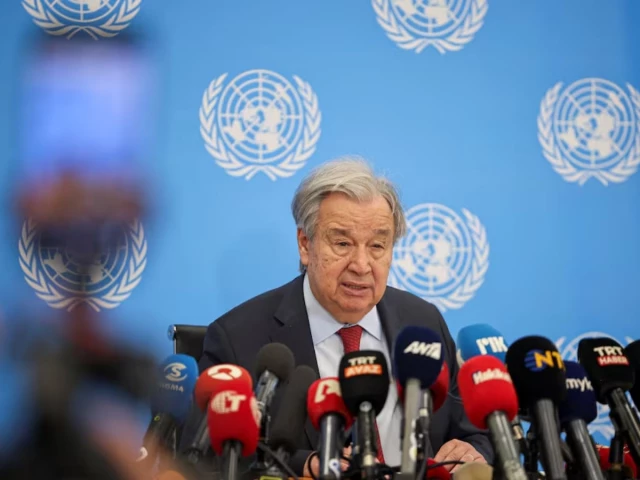
United Nations Secretary-General Antonio Guterres attends a press conference following a meeting with Cyprus President and Greek Cypriot leader Nikos Christodoulides and Turkish Cypriot leader Tufan Erhurman at a UN compound in the Nicosia airport area. — Reuters
UN Secretary-General António Guterres was seriously concerned about the US decision to impose sanctions on International Criminal Court (ICC) President Tomoko Akane and senior trial lawyer Abdoulaye Seye, a UN spokesperson said on Wednesday.
US Secretary of State Marco Rubio imposed the sanctions on Tuesday in the latest escalation in the Trump administration’s campaign against the Hague-based court, which was established in 2002 by the international community to prosecute war crimes, genocide and crimes against humanity.
Last month, I launched a diplomatic campaign to dismantle the ICC’s threat to our national sovereignty. The Trump Administration is sanctioning ICC President Tomoko Akane and Senior Trial Lawyer Abdoulaye Seye in our unwavering mission to protect Americans from this sham of a…
— Secretary Marco Rubio (@SecRubio) August 18, 2026
“The Secretary-General expresses serious concern about this designation, as well as the ongoing designation of other International Criminal Court employees,” UN spokesperson Stephane Dujarric told a regular UN briefing in New York.
Dujarric said that while the United Nations and the ICC were separate institutions with distinct mandates, the UN viewed the court as “a key pillar of international criminal justice.”
Earlier, the US State Department launched a campaign aimed at dismantling what the Trump administration had described as a threat by the ICC to “American sovereignty.”
Read: US sanctions International Criminal Court’s president, official
Speaking at Camp David last month, Rubio said the ICC had “made themselves illegitimate” by claiming jurisdiction over countries that are not members of the court. The US and Israel are not parties to the ICC.
Akane, the ICC’s sixth president and first Japanese national to hold the post, has repeatedly criticised the sanctions campaign since it began, telling the court’s Assembly of States Parties in December that the measures would not alter how judges interpret their mandate.
“We will never accept any kind of pressures from anyone on issues of interpretation of the statutory framework and adjudication of cases,” Akane told the assembly, stressing that the court’s “independence and impartiality are our polar stars and remain unaffected.”