Merchant discount rate for all card-present transactions at fuel stations capped at Rs1 per litre
KARACHI:
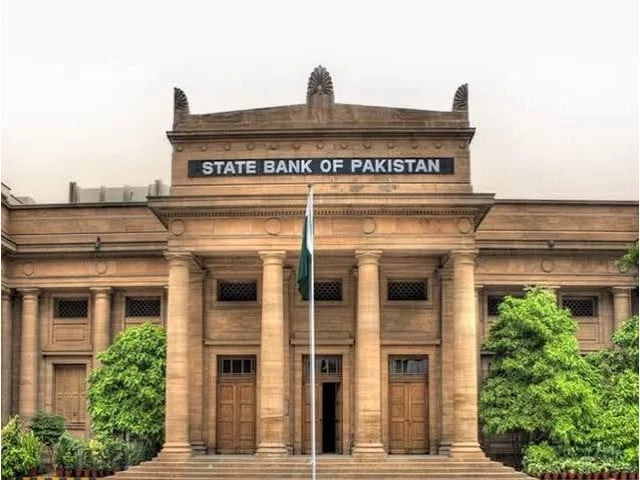
The State Bank of Pakistan (SBP) has moved to address the stubbornly slow adoption of digital payments at fuel stations compared with other segments of the retail sector by introducing temporary fee caps to reduce the cost of accepting card transactions.
Through PSP&OD circular issued on Monday, the central bank directed all banks, microfinance banks, electronic money institutions, payment system operators and payment system providers to implement the new limits until January 31, 2027.
The circular builds on earlier instructions issued in 2023. By combining lower payment acceptance costs with a renewed push for Raast QR, the SBP aims to narrow the digital payments gap in one of Pakistan’s most cash-intensive retail sectors.
Under the new arrangement, the merchant discount rate (MDR) for all card-present transactions at fuel stations involving the purchase of fuel and related products has been capped at Rs1 per litre, while the interchange reimbursement fee (IRF) has been limited to Rs0.20 per litre.
The measures apply to all payment cards issued in Pakistan and take immediate effect.
The SBP said the initiative is intended to facilitate digital payment acceptance at fuel stations and accelerate the deployment of interoperable Raast QR-based payment solutions.
Regulated entities have also been directed to actively engage fuel station merchants to enable and promote Raast QR acceptance during the implementation period.
The central bank said it would review the policy around the end of January 2027 in light of the market response.
Fuel stations have long lagged behind other retail categories in adopting electronic payments, often citing high acceptance costs and operational challenges.
By fixing transaction fees on a per-litre basis rather than as a percentage of the transaction value, the SBP aims to make card and QR-based payments more commercially viable for fuel retailers.
Financial and banking analyst Ibrahim Amin said the reduction in MDR and IRF should encourage fuel stations to install more POS terminals and QR codes.
Reducing the fees will positively impact their petroleum product sales; “hence, it is a win-win situation for all stakeholders,” he said.
Amin added that fuel station owners should pass on the benefits of lower acceptance costs to customers while ensuring robust security features to build consumer confidence.
He also stressed the need for staff training so that digital payment options are actively promoted across fuel station networks.
According to SBP data, Pakistan has approximately 248,000 POS terminals and 2.5 million QR-enabled merchants, while 68.3 million payment cards are currently in circulation.
Despite this growing infrastructure, cash remains the dominant mode of payment at many fuel stations, particularly outside major urban centres.
Former Federation of Pakistan Chambers of Commerce and Industry (FPCCI) secretary general Shahid Anwar described the decision as a positive step that could significantly promote digital payments.
However, he emphasised that the focus should extend beyond reducing card fees.
“The main focus should not rely solely on lowering card fees; it must also focus on rapidly promoting Raast QR payments,” Anwar said.
IT expert Dr Noman Said said the wider use of payment cards and QR codes would improve convenience for consumers.
He called for the facility to be expanded beyond major cities to tier-2 and tier-3 urban centres.
“Retail shops and fuel stations should also provide this facility of payment to customers not only in selected cities but this option should be made available in tier 2 and tier 3 cities,” he said.
While welcoming the SBP’s decision, All Pakistan Petroleum Dealers Association (APPDA) spokesperson Hassan Shah said, “the revised MDR cap of Rs1 per litre remains higher than economically justified”.
A POS terminal costs around Rs30,000 with monthly expenses of about Rs5,000, costs that can be recovered without such a charge given transaction volumes.
Dealers earn only Rs8.64 per litre after withholding tax and must cover salaries, rent, electricity and other overheads.
As fuel is an essential commodity, digital acceptance costs should be kept as low as possible to promote financial inclusion.
For Raast QR, lower or zero MDR, free onboarding, staff training, reliable instant payments and consumer incentives will accelerate adoption.
“We value the SBP’s consultative approach and urge institutionalised engagement with the APPDA before future policy changes.”