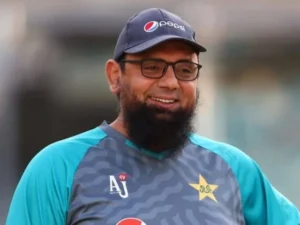

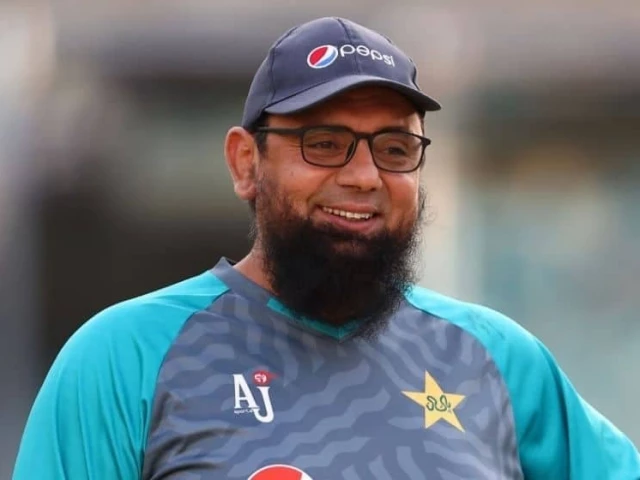
Former Pakistan coach Saqlain Mushtaq identifies some of the issues affecting Pakistan cricket. Photo: AFP/File
KARACHI:
Former Pakistan Test spinner Saqlain Mushtaq has called for a specialised and consistent system to develop world-class spinners in the country, saying Pakistan has no shortage of talent but needs a clear vision, long-term planning and expert coaching to turn potential into results.
In an interview with The Express News Cricket Corner Saqlain said spin bowling was a specialised field and should be entrusted to people who understood its demands. Such experts, he added, should also be given the freedom and confidence to perform their responsibilities.
“Improvement in spin bowling will not come merely by producing a few talented players,” Saqlain said, stressing the need for continuous coaching, planning and long-term player development.
He identified a lack of professionalism, reluctance to accept responsibility, lack of mutual trust and the failure to properly utilise specialists as some of the issues affecting Pakistan cricket. He said every department should be headed by people with relevant expertise and experience and that they should be given the authority to perform their duties.
Saqlain also urged everyone involved in cricket to put the country ahead of personal interests, claims and blame games. Pakistan, he said, would continue to produce talented players, but the real challenge was to refine that talent through proper systems, modern coaching, facilities and guidance.
The former spinner also rejected allegations made by former Pakistan spinner Tauseef Ahmed regarding Shadab Khan’s selection. Saqlain said he had never had a detailed telephone conversation with Tauseef and that the calls exchanged between them had been missed. He said he had subsequently sent a voice message around two-and-a-half years ago and had no objection to it being made public.
Saqlain said he respected his seniors but felt compelled to clarify his position when his integrity or reputation was questioned. He also said his meetings with Shadab were now infrequent and that they did not discuss cricket matters or selection in any special manner.
On his relationship with former Pakistan captain Mohammad Hafeez, Saqlain said there had been no disagreement between them. He explained that during a television programme, Hafeez had asked him about the roles of Shadab, Mohammad Nawaz and Saim Ayub, and he had discussed the all-rounders in the context of their current form and the team’s requirements.
Saqlain said selecting the final XI from a 15-member squad required consideration of form, confidence, opposition, conditions and team combination.
Recalling his coaching stint, Saqlain said reaching the World Cup final had been the fulfillment of a dream. He said the PCB had later asked him to resign after a project was discontinued. He subsequently offered to work solely with the spin department, including developing spin coaches and bowlers, but received no response.
He said he had opportunities abroad but repeatedly returned because of his desire to contribute to Pakistan cricket.
Saqlain also called for better training and language support for local assistant coaches working with foreign coaches. Having interviewed hundreds of coaches during his involvement in player development, he said some experienced Pakistani coaches struggled with technical terminology in English, which could affect the coaching message.
He further urged former players and sports journalists to use their platforms responsibly, warning that persistent negative discourse could distance young people from Pakistan cricket. Media, he said, could instead deliver positive, educational and encouraging messages to inspire a new generation.