
ISLAMABAD:
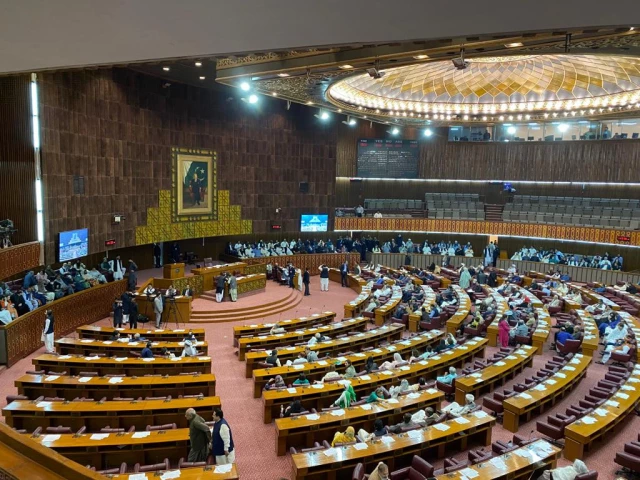
The National Assembly Secretariat expects a major saving against this fiscal year’s Rs17 billion annual budget, as the past two years of administrative and fiscal reforms introduced by the speaker have already yielded 30% savings and cut the bloated size of employees by nearly 20%.
The assembly secretariat has abolished 302 posts and returned Rs8.6 billion to the exchequer against the cumulative allocations of Rs29 billion for fiscal year 2024-25 and 2025-26, according to a background briefing by the NA secretariat. The savings are equal to 30% of these allocations.
“We also anticipate major savings against this year’s Rs17 billion,” said a senior official of the secretariat.
The discretionary powers to make appointments have also been replaced with new, law- and rule-based service procedures. The changes are intended to bring greater transparency to the appointment process while shielding the speaker from political pressure and influence in making such appointments.
The achievement has been reported at a time when the federal government is struggling to cut its bloated size and introduce civil service reforms. In the absence of these reforms, the federal government has taken ad-hoc measures of introducing executive allowance and All-Pakistan Service Provincial Disparity allowance, which would create more disparity.
The cabinet committee on rightsizing has not yet announced any drastic set of reforms, and only piecemeal measures were taken during the past two years.
Finance Minister Muhammad Aurangzeb on Monday chaired a meeting of the sub-committee on rightsizing to review progress on the ongoing right sizing exercise and discuss measures to accelerate implementation of approved recommendations.
The official handout by the finance ministry did not mention any tangible outcome except the statement, saying “It was noted that waves 1 to 4 have largely progressed following cabinet approval, while follow-up is underway in areas where recommendations have already been made. Recommendations for Waves 5 and 6 have also been prepared and shared with the relevant authorities, while work on Waves 7 and 8 are in progress”.
The finance minister emphasised that the exercise should move more decisively towards implementation, said the ministry. The finance minister stressed the need to clearly quantify recurring savings and ensure that the fiscal impact of approved rightsizing measures is fully captured in the budget and medium-term fiscal framework, it added.
However, contrary to this, the set of reforms that National Assembly Speaker Sardar Ayaz Sadiq introduced has resulted in giving a service structure to the employees who will now also be required to submit their annual returns and wealth statements, which the Federal Board of Revenue will make public like other civil servants.