
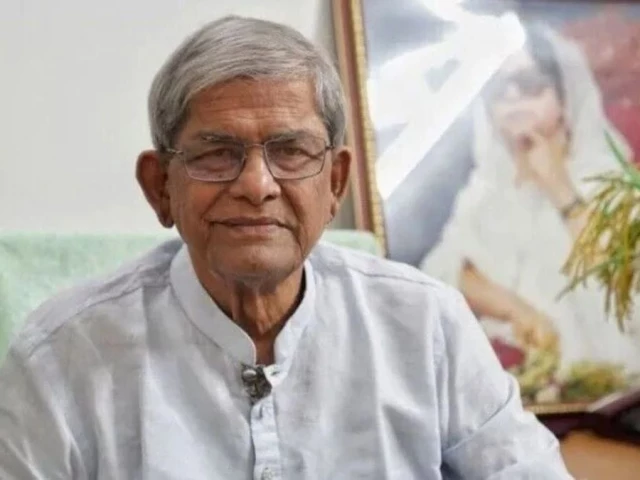
War veteran and veteran leftist politician becomes Bangladesh’s highest constitutional office holder
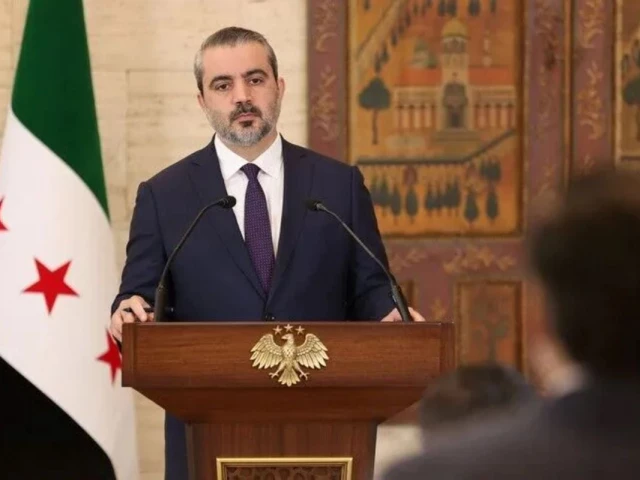
Alamgir secured support of 255 lawmakers, while his opponent Ahmed received 88 votes.PHOTO: ANADOLU
Days before Bangladesh’s disputed 2018 general election, Mirza Fakhrul Islam Alamgir appeared in a campaign video urging voters to go to polling stations despite fears of intimidation.
The Bangladesh Nationalist Party (BNP) secretary general spoke about democracy, authoritarianism under then-Prime Minister Sheikh Hasina, and the importance of voting. Then he mentioned something many Bangladeshis did not know: he had fought in the 1971 war with then-West Pakistan that led to the creation of Bangladesh.
Evoking the war, Fakhrul said he wanted Bangladeshis to fight again, this time through the ballot box to restore democracy.
He had rarely foregrounded his own role in some of Bangladesh’s defining historical events.
On Thursday, eight years later, Fakhrul, 78, was elected Bangladesh’s 23rd president, capping a political career spanning the 1971 war, government service, electoral politics, years of opposition politics, and imprisonment.
Prime Minister Tarique Rahman’s ruling BNP had nominated Fakhrul for the presidency, making his victory effectively assured even before lawmakers voted.
In Bangladesh’s parliamentary system, the president is elected by members of parliament. The BNP and its allies command a two-thirds majority, while Article 70 of the Constitution prohibits lawmakers from voting against their party in parliament.
The opposition alliance nominated another veteran politician, Liberal Democratic Party Chairman Oli Ahmed. But without the parliamentary numbers required to defeat the BNP candidate, his nomination was largely symbolic.
For Fakhrul, the election marks a transition from decades of partisan politics to a constitutional office intended to stand above party competition.
Fakhrul secured support of 255 lawmakers, while his opponent Ahmed received 88 votes.
From Liberation War to opposition politics
Born in the northern district of Thakurgaon in 1948, Fakhrul grew up in a politically active family. His father, Mirza Ruhul Amin, was a lawyer and politician who served in parliament, while his uncle Mirza Golam Hafiz later became parliament speaker and a Cabinet minister.
Fakhrul’s own politics initially developed on the left.
While studying economics at Dhaka University in the nation’s capital, he joined the East Pakistan Students Union, associated with the communist movement, and became president of its university unit during the 1969 mass uprising against the rule of Pakistan’s Ayub Khan.
When war broke out in 1971, Fakhrul joined resistance activities in Thakurgaon.
In later interviews, he described getting weapons from a police arsenal, organizing local resistance, arranging weapons training, and helping dismantle a bridge to impede Pakistani troops. After local resistance collapsed, he crossed into India, where he helped organise young Bangladeshis being sent to training camps.
His wartime record remained surprisingly little known for decades in a political culture where participation in the Liberation War frequently became an important political credential.
After independence, Fakhrul taught economics at Dhaka College and entered government service. He served as secretary to Deputy Prime Minister S.A. Bari during BNP founder Ziaur Rahman’s presidency before returning to teaching at Thakurgaon Government College.
He later resigned from government service and entered electoral politics, winning the chairmanship of the Thakurgaon municipality as an independent in 1988.
He joined the BNP around the anti-Ershad movement and became its Thakurgaon district chief in 1992. Fakhrul entered Parliament in 2001 and subsequently served as state minister for agriculture and later for civil aviation and tourism.
His national ascent, however, came after the BNP lost power.
He became senior joint secretary general in 2009, acting secretary general in 2011, and formally secretary general in 2016, placing him at the center of the party during its most difficult period.
Read More: Bangladesh elects BNP veteran Alamgir as president
With BNP Chairperson Khaleda Zia imprisoned and Tarique Rahman living in exile in London, Fakhrul became the party’s principal public voice during years of crackdowns by the Hasina government.
His restrained manner frequently contrasted with Bangladesh’s combative political rhetoric.
Even Obaidul Quader, then-secretary general of the rival Awami League, described Fakhrul in 2019 as a “gentleman” and “good man,” saying he had never heard him use abusive language.
That reputation survived years of confrontational street politics, criminal cases, and imprisonment.
Following violence around a major BNP rally in Dhaka on Oct. 28, 2023, police detained Fakhrul at his home. He remained incarcerated as authorities launched a broad crackdown on BNP leaders and activists ahead of the January 2024 elections, which the party boycotted.
By then, Fakhrul was reportedly facing around 100 criminal cases.
One arrest came at a particularly difficult personal moment. In December 2022, police detained him around 3 am while his wife, Rahat Ara Begum, was preparing for surgery following a serious diagnosis.
“While my wife was having her surgery, I was in jail,” Fakhrul later wrote.
Liberal nationalist moves to presidency
Fakhrul describes himself as a liberal democrat, a position shaped partly by his journey from leftist student activism to the centre-right BNP.
“I used to engage in leftist revolutionary politics,” he told The Daily Star in 2024, saying that experience eventually persuaded him that progress has to come through democracy.
His politics have not always fitted comfortably within Bangladesh’s familiar ideological divisions.
Fakhrul has consistently defended the centrality of the 1971 Liberation War to Bangladesh’s national identity and periodically clashed with Jamaat-e-Islami, whose senior leaders opposed independence during the war.
In March 2025, he warned against attempts to diminish 1971 after the uprising that toppled Hasina the previous year, saying people who had assisted Pakistan’s wartime campaign were again becoming vocal.
At the same time, he has adapted his liberal instincts to the politics of a Muslim-majority country.
During the 2026 election campaign, Fakhrul told Al Jazeera that secularism was not the BNP’s objective, preferring instead to emphasise equal rights for followers of all religions.
His exchanges with Jamaat became sharper as the former tactical partners emerged as electoral competitors after Hasina’s fall.
Fakhrul recently drew criticism after suggesting in Rangpur that the region remained underdeveloped because voters had repeatedly supported parties other than the BNP. Jamaat lawmakers protested, while supporters demanded he withdraw the remarks.
His election as president now removes him from daily partisan politics after more than a decade at the center of the BNP leadership. He resigned as secretary general after receiving the presidential nomination.
Bangladesh’s presidency is largely ceremonial under its parliamentary system, but the office carries constitutional responsibilities and considerable symbolic weight, particularly during institutional or political crises.
For Fakhrul, Bangabhaban – the presidential office – is an unusual final destination for a politician whose career has crossed nearly every major political era of independent Bangladesh.
He participated in the 1969 uprising, fought in the 1971 war, entered electoral politics around the movement against Ershad, and spent the Hasina years moving among party headquarters, rallies, courtrooms, and prisons.
Through those decades, Fakhrul rarely used his wartime record as a political credential and largely avoided personal attacks even as Bangladesh’s political language became increasingly bitter.
That restraint produced the description that has followed him for years: the “gentleman of Bangladeshi politics.”