
Affectees have been deprived of their rightful land amid fraud, weak oversight in housing scheme
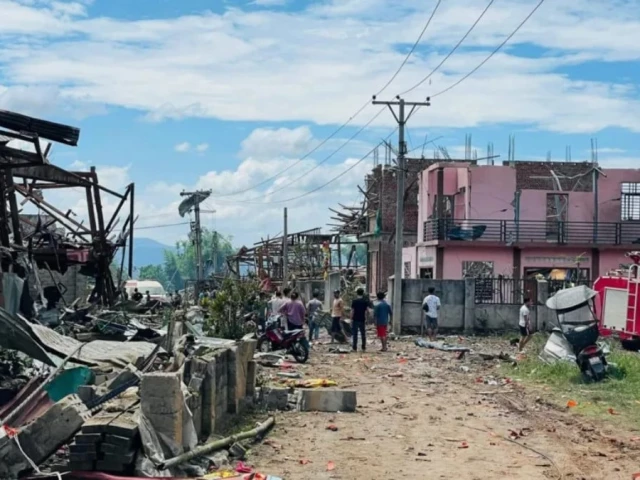
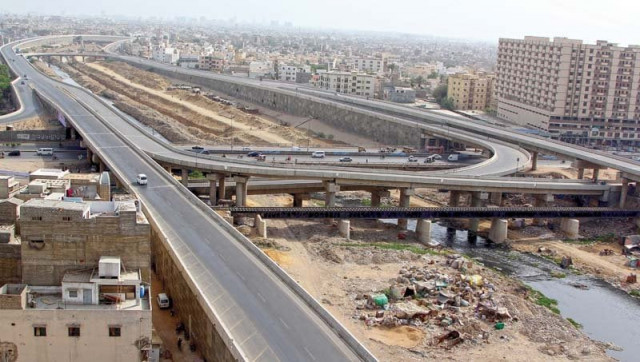
A section of the Lyari Expressway near Civic Centre and Essa Nagri. PHOTO: AYSHA SALEEM/EXPRESS
The National Accountability Bureau (NAB) has initiated an investigation into alleged corruption worth millions of rupees in the Lyari Expressway Resettlement Project, which was launched to rehabilitate thousands of families displaced by the construction of the Lyari Expressway.
According to a public notice issued by NAB Karachi, investigations have revealed that, in collusion with officials of the Lyari Expressway Resettlement Project, property dealers illegally sold hundreds of plots — allocated in the names of affectees — to unrelated individuals. These included plots reserved for welfare purposes.
In the areas designated for resettlement along the Lyari Expressway, particularly Hawke’s Bay and Taiser Town, property dealers began the illegal buying and selling of plots despite government restrictions.
During this period, various groups emerged under the name of “property banks”, collecting money from citizens and issuing plot files to them. Many of the affected individuals were poor people whose plots were sold to others. Due to prolonged delays in receiving their plots, they suffered severe financial and psychological losses.
Read: Choked by concrete – Lyari Expressway vs Malir Expressway
It is worth noting that the Expressway project was initiated in the early 2000s to address Karachi’s growing traffic problems. For its construction, thousands of homes along the Lyari River were demolished, affecting approximately 20,000 to 25,000 families.
To rehabilitate these families, the Government of Sindh launched the Lyari Expressway Resettlement Project, under which affected families were provided 80-square-yard residential plots in suburban areas along with limited financial assistance.
Areas such as Hawke’s Bay and Taiser Town were selected for resettlement, where basic amenities were promised. However, in practice, residents faced a long-term lack of essential services such as water, electricity, sewerage, education and healthcare. As a result, many affected families were forced to sell their plots.
The largest population of affectees was settled in an area known as Musharraf Colony in Hawke’s Bay, consisting of multiple sectors across three blocks and home to thousands of residents. However, more than half of the population does not belong to the original affectees.
A resident, Asad Ali, stated that most of the original affectees had sold their plots. “Although all plots in Musharraf Colony were 80 square yards, many individuals purchased two to three plots and constructed larger houses. Drinking water is only available in Sector 6 of the entire colony,” said Ali.
Experts believe that the main causes of fraud and irregularities in the Lyari Expressway Resettlement Project include poor record-keeping, a lack of transparency and weak monitoring of the allotment system. This issue not only raises questions about urban planning but also highlights how the absence of transparency and effective oversight in major development projects can lead to significant public losses.
Also Read: Lyari Expressway closures cripple traffic
According to Gul Muhammad Baloch, a community worker, many government housing schemes in the province show similar conditions. The Sindh government of the Pakistan Peoples Party had also developed a colony named Benazir Town in the Hawke’s Bay area for the families of martyred party workers, but due to various reasons, not a single family has built a house there yet.
The Express Tribune contacted the Project Director of the Lyari Expressway Resettlement Project, Engineer Samad Jamalani, for comment, but no response was received.