
Pregnancy is often described as a personal journey, but no mother experiences it entirely alone. Her health and wellbeing are influenced by the information she receives, the support available at home and the care she can access when needed. This is why it takes a whole village to support a healthy pregnancy. Regular antenatal visits remain essential.
However, families also need guidance to translate medical advice into everyday practices. Decisions about food, rest, household responsibilities, emotional support, birth preparation and newborn care are often made within the family. When family members are informed and prepared, they are better able to support the expectant mother throughout pregnancy and after childbirth.
What Is Antenatal Education?
Antenatal education, commonly known as ANE, prepares expectant parents for pregnancy, childbirth and the early postnatal period. It can provide trimester-appropriate information about nutrition, physical and emotional changes, birth preparedness, breastfeeding, newborn care, maternal wellbeing and situations in which professional support should be sought. ANE also gives parents a safe space to ask questions. Pregnancy can be exciting, but it may also bring uncertainty and anxiety. Reliable information can help families understand what to expect, prepare practically and communicate more confidently with healthcare professionals. Most importantly, antenatal education is not only about giving people information. It builds confidence, encourages preparation and helps families develop the practical skills they will need during childbirth and the early weeks of parenting.
Moving Beyond Fragmented Information
In Pakistan, pregnancy-related advice often comes from relatives, friends, community traditions, social media and online searches. Family experience can provide comfort and reassurance, but it may not always offer complete or medically appropriate information. The purpose of antenatal education is not to disregard family knowledge or cultural practices. It is to create a respectful space where questions can be discussed, and information can be understood alongside current professional guidance. Online platforms and artificial intelligence are also becoming common sources of pregnancy-related information. These tools may help families learn basic concepts or prepare questions for their healthcare providers. However, online information should not be used to diagnose a condition or replace consultation with a qualified professional. Families need help distinguishing between general awareness and advice that requires individual medical assessment.
Pregnancy Is a Shared Family Experience
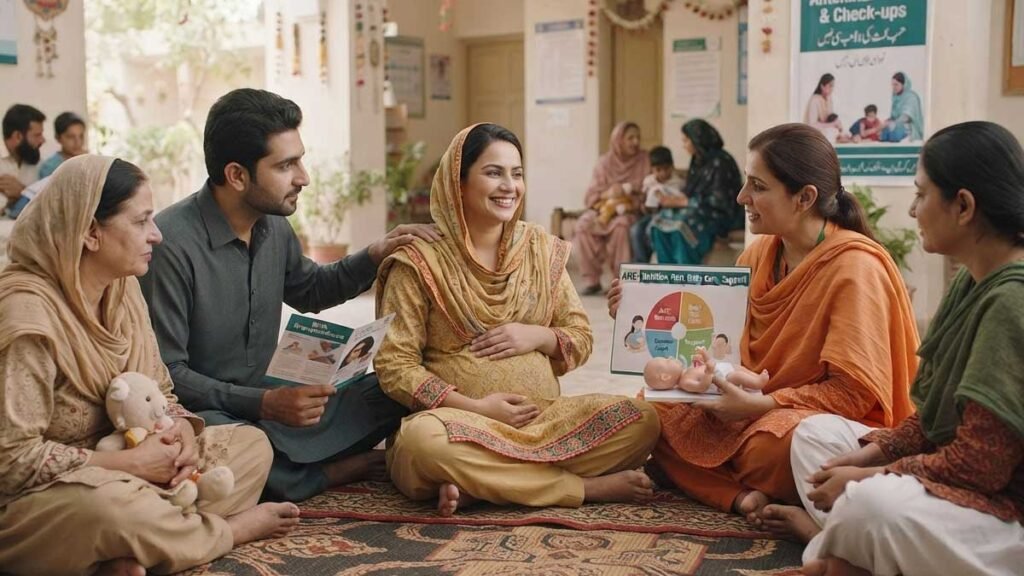
Antenatal education should include fathers and other family members who will support the mother, where appropriate. Their participation can build a shared understanding of nutrition, breastfeeding, newborn care, emotional wellbeing and household responsibilities. Practical support can make a meaningful difference.
A family member may help arrange transport for appointments, ensure that the mother has time to rest, assist with household tasks or accompany her when care is needed. Such preparation is particularly valuable during the early postnatal period, when the mother is recovering and the family is adjusting to the arrival of a newborn. Family involvement should create a circle of care around the mother. The objective is not to overwhelm her with advice, but to ensure that she feels heard, supported and able to seek appropriate care.
Parenting Begins Before Birth
Parenting does not suddenly begin when a baby is born. It begins during pregnancy through preparation, expectations, relationships and the environment a family creates for the child. From an early childhood development perspective, antenatal education is among the earliest opportunities to strengthen a child’s start in life. Families can be introduced to nurturing care, early bonding, responsive caregiving and the importance of the first 1,000 days. These concepts become meaningful when connected with everyday actions. Parents can learn why talking gently to a baby, responding to cries, holding the newborn safely and creating a calm caregiving environment matter. Families can also discuss how they will share responsibilities, support breastfeeding and protect the mother’s recovery and emotional wellbeing.
Antenatal education therefore connects maternal health with early childhood development. It helps families recognise that a child’s development is shaped not only by what happens after birth, but also by the care, preparation and support surrounding the mother during pregnancy.
From Lectures to Practical Preparation
ANE should be more than a one-way lecture. Effective sessions should include conversations, demonstrations, questions and practical preparation. Parents may benefit from learning how to prepare for hospital admission, organise essential items, plan transport, understand basic newborn care and identify where to seek professional help.
They should also have opportunities to discuss personal concerns in a respectful setting. Every family enters pregnancy with different experiences, resources and needs. A first-time parent may require different support from someone who has previously cared for a newborn. Similarly, families living far from health facilities may need different preparation from those living near a major hospital. A consistent antenatal education framework should therefore provide essential information while remaining adaptable to language, literacy, culture, family circumstances and access to services.
Making Antenatal Education More Accessible
Some hospitals and healthcare facilities already provide antenatal education, but many families still have limited access to structured guidance. ANE can be made more accessible by integrating it into routine antenatal services. Hospitals, clinics and community programmes can offer short group sessions, individual counselling, family discussions, culturally appropriate materials and simple digital resources. Community health workers can also help extend reliable information to families who may not be able to attend formal classes.
The aim should be to connect pregnancy care with childbirth preparation, postnatal support, breastfeeding, maternal wellbeing, newborn care and early childhood development. Families experience these stages as one continuous journey, and the support available to them should reflect that continuity. A healthy pregnancy is not the responsibility of the mother alone. Healthcare professionals provide essential guidance, but families and communities help create the conditions in which that guidance can be followed. When parents are informed, families are supportive and services are accessible, antenatal education becomes more than a class. It becomes the beginning of nurturing care and a stronger start for both mother and child.
This public-awareness article reflects the authors’ personal views and is not a substitute for professional medical advice. Aleesha Kashif, interns in ECD PREP, contributed under the supervision of Dr Shelina Bhamani, Associate Professor in ECD PREP, ObGyn at the Aga Khan University.