



An earthquake is suspected to have triggered an ice-rock avalanche, causing floods in Nepal’s Lhende Khola river
An injured man is rushed to a hospital after devastating floods near Nepal, China border. PHOTO: REUTERS
KHATMANDU:
A wall of mud and rock appeared to collapse into a river on the Himalayan border of Nepal and China’s Tibet on Wednesday, triggering catastrophic flooding on the Nepali side that killed at least 95 people and left hundreds of tourists missing.
The tourism ministry has also given an update, saying 341 foreigners are missing.
Authorities have warned that a second flood may occur as a blockage is still lodged upstream on the Lhende Khola river.
Flood alerts have also been issued in the Indian states of Bihar and Uttar Pradesh, which border Nepal, as several rivers flow down the Himalayas into their plains.
Police and military personnel were engaged in rescue efforts, although officials said rescue helicopters would not be able to land in the affected areas until the waters recede.
People living in low-lying regions were being moved to safer places, and those along the river were advised to remain alert.
What triggered the flood?
It is suspected that an earthquake struck the region and triggered an ice-rock avalanche on the Lhende Khola river in Nepal, causing the floods.
Read More: Indus remains in low flood at five points
The river runs through both Nepal and Tibet.
The German Research Centre for Geosciences (GFZ) said there was a 4.4 magnitude quake approximately seven minutes before the time shown on security footage, which captured people fleeing the border.
Nepal’s Foreign Minister Shishir Khanal told the country’s parliament that initial reports suggested an earthquake in the area could have triggered an avalanche and caused the floods, local media reported.
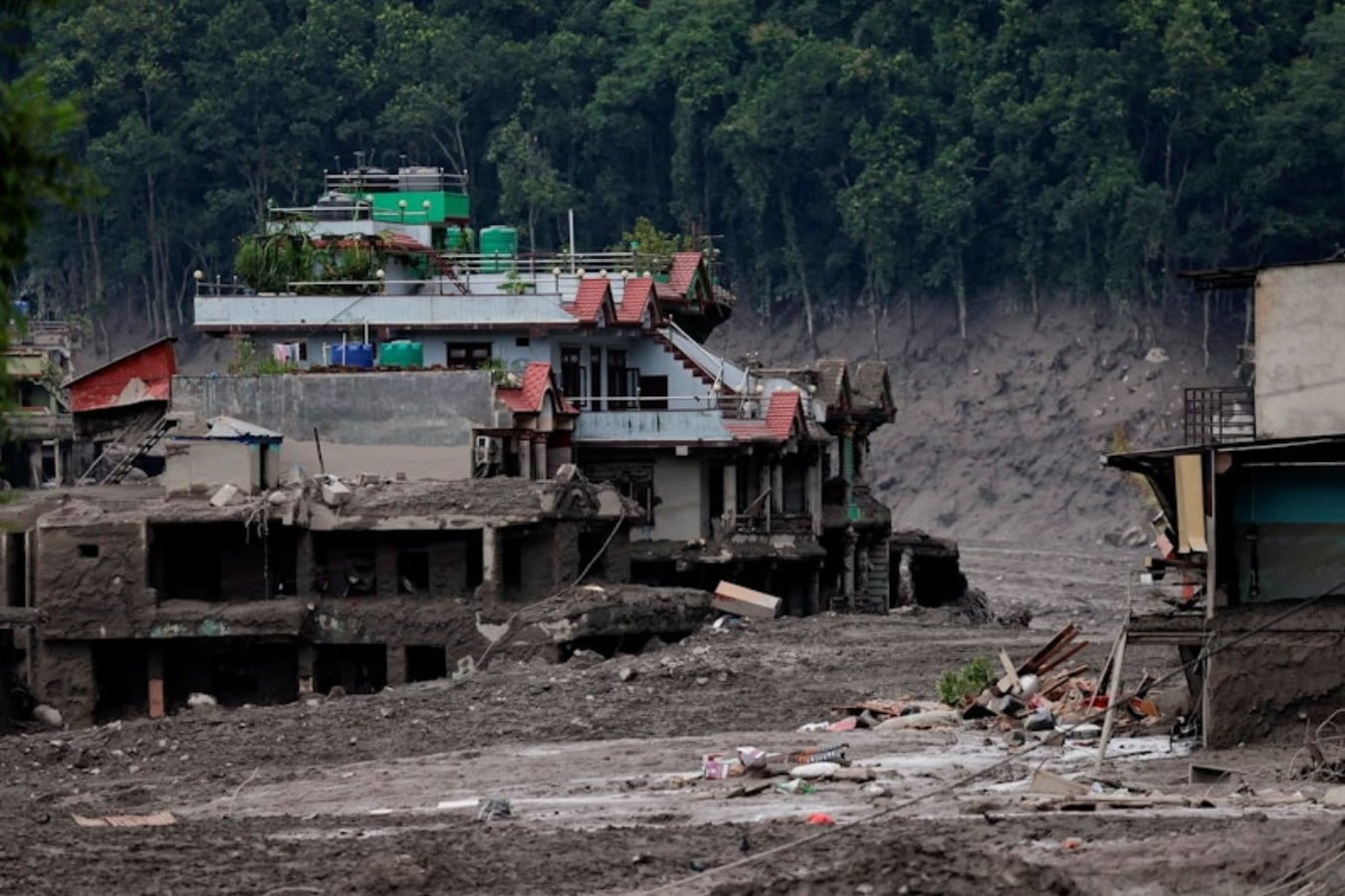
Damaged houses, August 26, 2026. REUTERS
China’s official Xinhua news agency said the mudslide occurred on the Nepali side and hit the Gyirong port in Shigatse City, Tibet, cutting roads, communications and power links in the Shigatse region near the border. Xinhua did not elaborate further.
A rescuer told CCTV earlier that it would take at least four hours for the team to reach the site due to sediment 1.5 metres deep that blocked pathways leading to the affected area.
The debris had surged upstream from the Nepalese side of the crossing, the rescuer said.
Chinese President Xi Jinping urged “all-out” search efforts for the missing, as well as stronger monitoring and early warning systems to prevent secondary disasters.
Nepal’s Prime Minister Balendra Shah said police and military were joining in the rescue effort.
“Instructions have been given … to move the people living in the lower areas to safer places,” he said.
“People along the river are advised to exercise extra caution and remain alert.”
The Lhende Khola river originates in Gyirong County in Tibet and flows south to join the Trishuli river in Nepal.
Chinese state broadcaster CCTV said authorities had deployed at least 574 rescuers to Tibet’s Gyirong land crossing.