
PUBLISHED
May 03, 2026
KARACHI:
Authors usually want their readers to imagine the world presented in their novels. But Turkish Nobel laureate Orhan Pamuk asked them to literally walk into his. Most novels leave their worlds behind on the page. When the book closes, the characters and their belongings dissolve back into imagination. But in 2008, when Pamuk wrote The Museum of Innocence, he decided that his story should never ever disappear. He built a permanent home for it. Confused? Read on.
On one of the many cobbled streets in Istanbul, in a quiet corner stands a museum that displays the objects of a fictional love affair — an earring, a lighter, a perfume bottle, thousands of cigarette butts, figurines of a crow, a dog, a salt shaker and much more. What an incredibly unique and creative idea!
Can you imagine a museum inspired by the psycho-thriller series You? Or a Bridgerton museum? The latter would be full of Queen Charlotte’s wigs, flouncy gowns, Lady Whistledown’s manuscripts, and chandeliers. While the former would house the goriest and the most gruesome chapters from serial killer Joe’s life.
But Pamuk’s rare literary experiment, where a novel and a museum exist side by side each giving life to the other, began with a prince and a memory.
In 1982, when Pamuk met the exiled Ottoman prince Ali Vasıb Efendi, he was struck by how a life severed from its past clung to small objects and recollections. The encounter sparked an unusual thought: what if a life could be preserved like a museum?
Decades later, that thought lingered and materialised into a novel — The Museum of Innocence — and an actual museum in Istanbul where visitors can wander through the objects of a fictional love story.
After receiving the 2006 Nobel Prize in Literature, Pamuk published the novel, considered one of the most subtle portrayals of memory, loss and desire in Turkish literature. Set in Istanbul between 1975 and 1984, it’s a love story between a wealthy businessman, Kemal and Füsun, a poor distant relative.
Many years later, this layered story has made its way to Netflix — not simply as a screen adaptation, but as an attempt to carefully recreate the novel’s intellectual world. The series traces love, happiness, longing and lost possibilities, using a multi-layered narrative to transport viewers back into Istanbul’s past.
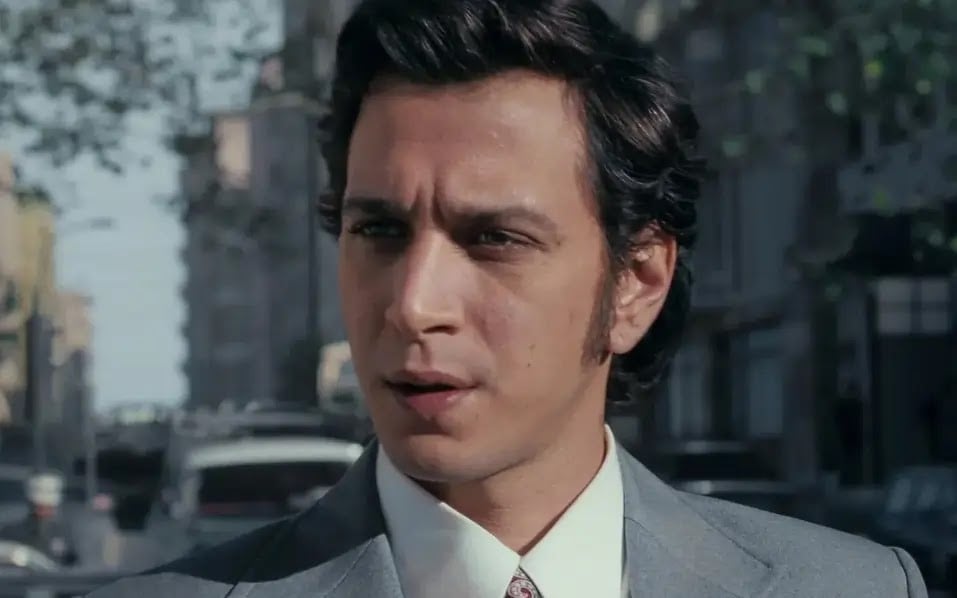
Directed by Zeynep Günay and written by Ertan Kurtulan, the series stars Selahattin Paşalı, as the handsome Kemal, and Eylül Lize Kandemir who played the aptly-named Fusun, which means a spell, for truly it was as though, upon sighting her, Fusun had put a spell on Kemal. The cast also includes seasoned Turkish actors such as Oya Unustası, Tilbe Saran, Bülent Emin Yarar, Gülçin Kültür Şahin and Ercan Kesal.
Since the series launched on Netflix, the novel The Museum of Innocence was sold out in bookshops. Social media feeds have been entirely saturated with images from the show, and the Museum of Innocence in Istanbul’s Çukurcuma district has seen a renewed surge of visitors.
Unwilling to confine the story to the page, Pamuk wandered through the charming lanes and bazaars of Istanbul, picking trinkets and objects, to add to his collection of family keepsakes that would bring the characters in his novel to life. He decided to exhibit the objects through which the narrative unfolds in the museum, housed in an old apartment building, deliberately blurring the boundary between fiction and reality. The project was imagined as something that could exist both as literature and in physical form, keeping an invented story alive through tangible objects. The museum does not only depict the lives of Fusun and Kemal, it also provides a window into a decade of Istanbul’s history.
Opened in the spring of 2012, the Museum of Innocence exhibits the objects described in the novel, each item a witness to Kemal’s lost love. As visitors move past the display cases, they follow not only objects, but Kemal and Fusun’s lives after they met and carried on their tumultuous love story, blending reality and fiction.
There are hundreds of items laid out on display in 83 showcases [the same number of chapters in the book]. To preserve a certain moment, he kept an earring, a cigarette butt, a lipstick, marbles, a porcelain toilet chain pull, a doll’s plastic arm and even a salt shaker. Like an indulgent kleptomaniac, in the book, Kemal he stole the figurine of a dog from Fusun’s house, replacing it with two more. It wasn’t about theft or possession, it was about selfishly saving the memory of the moment for himself.
From bits of jewellery to items of clothing, photos, cinema tickets and bottles of Meltem soda, which was popular in the 1970s, there is a huge collection of mundane mementos passionately collected to fill the void left by Fusun’s absence. Perhaps, Kemal’s compulsive collecting actually reflected Pamuk’s passion for picking up odd bits and bobs.
One of the most arresting, wall-sized display cases houses trash. These are the 4,213 cigarette butts, smoked by Fusun. Each has dates and annotations written by Kemal detailing what Füsun had done or said to Kemal that day.
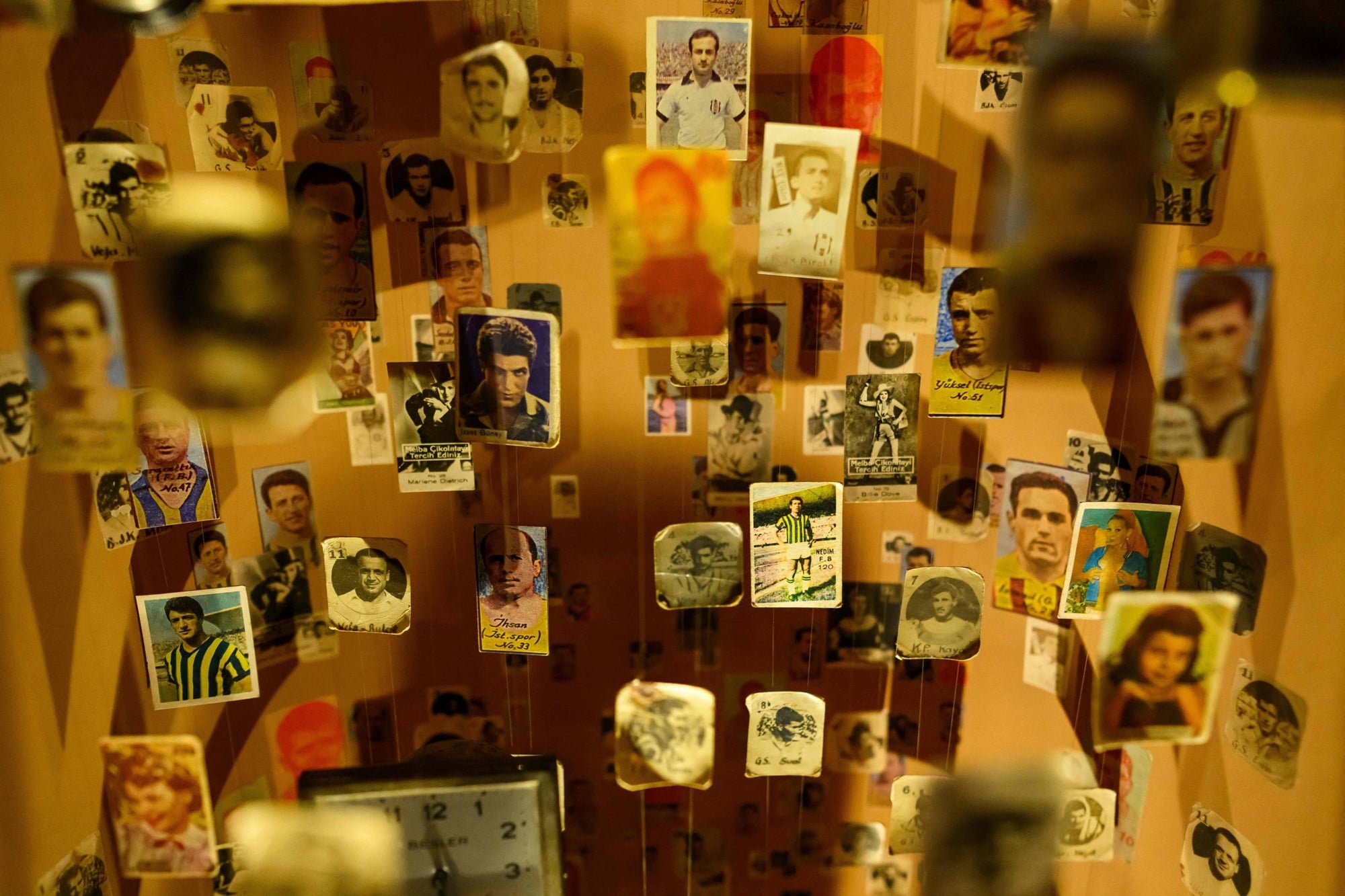
According to a museum official, the Netflix series boosted the average 200 visitors a day to 500 when the trailers for the series started running. With the novel translated into more than 60 languages, the museum has drawn international interest, with visitors from Russia, Hungary, Italy, Japan and China turning up over the space of a few hours, according to an AFP report.
The novel’s adaptation for the small screen by the Istanbul-based production company Ay Yapım is a reflection of the robust health of Türkiye’s hugely popular film industry. Turkish television dramas and series are now available in 170 countries, with global demand for them rising by 184% between 2020 and 2023.
In 2024, Türkiye was the world’s third-largest exporter of television series, after the United States and the UK.
The Museum of Innocence, which is a nine-episode series, is less a love story than one bordering on obsession. Some viewers found Kemal’s love a bit creepy but if you look at it in the sense that the story explored a relationship between two people – one mature, one younger — a forbidden love not only because Kemal already had his fiancée Sibel in his life, but also because there was a social class difference between him and Fusun. Since so much of their relationship was uncertain and hidden from other people, Kemal clung to each little memory which he brought to life with little objects from his time spent with her.
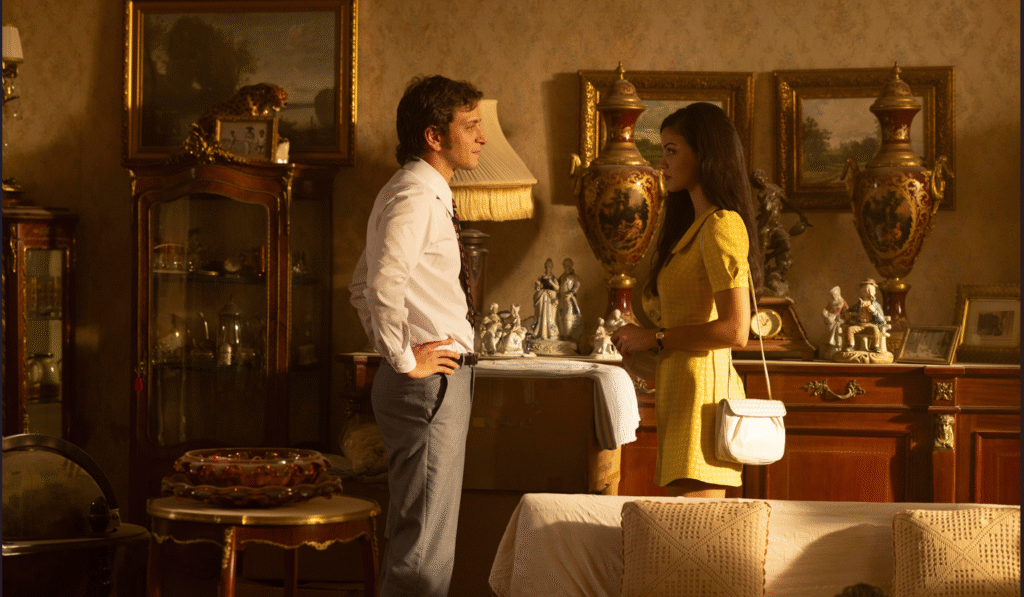
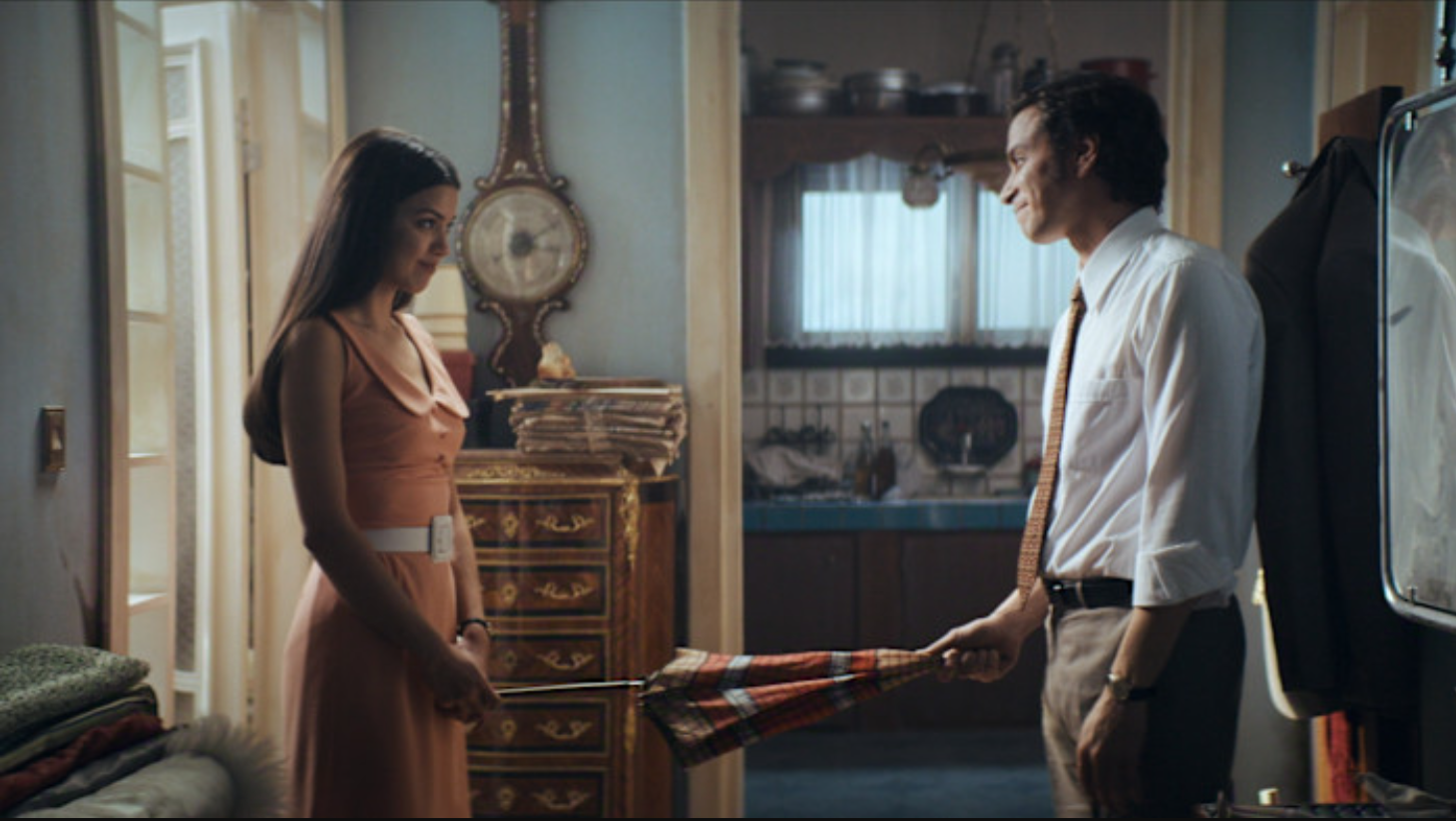
Günay and Kurtulan meticulously and immaculately recreate the ambience of 1980s Istanbul. The cars, the clothes, the texture of interiors, imagery of daily life on the streets and the beautiful traditional form of Ottoman-era Turkish classical music performance known as fasil playing in the background. You can just smell the streets of Istanbul, the whiff of coffee, the freshly baked bread, compulsive smoking and aromatic tea as the characters gently stir sugar in the ince bell, the slender-waisted Turkish traditional tea cups.
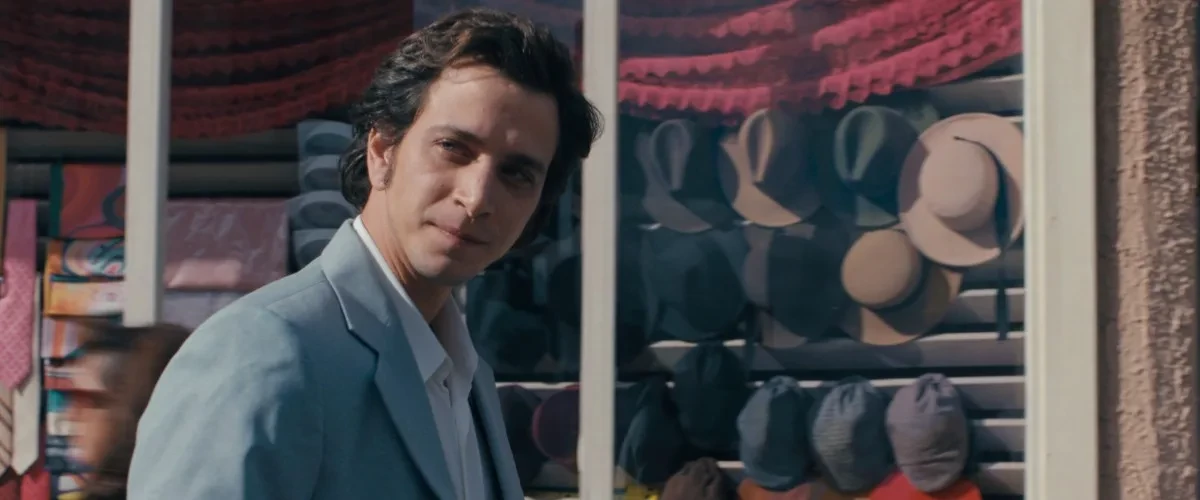
The story is centred on Kemal, the way he lives this love transforms his identity and his very existence – his love being intense, possessive and fixated on remembering. In contrast, the 18-year-old Fusun’s love is quiet, repressed and shaped within social constraints. In the first episode, Kemal who has a Western college education, looks, wealth, a loving family, an attractive, wealthy, and loving fiancée named Sibel (Oya Unustasi), good friends, and a bright blue sky of a future may appear to be a philandering predator than a man who is denying his deep love for someone. Sadly, he decides to blow it all up by starting an affair with a distant cousin, whom he spots working in a boutique.
Interestingly, both main characters have unlikeable sides to them. Kemal being dishonest to his fiancée, lying about his relationship with Fusun, neglecting his responsibilities, ruining his life with impulsiveness, while Fusun was only 18, immature, selfish and reckless. Both the main characters are selfish in their own ways.
In their first few meetings, he is increasingly drawn to Fusun’s innocence as much as her beauty. In many ways, Füsun is still a girl, while Sibel is a beautiful, sophisticated woman. Disloyal to his fiancée, he lies his way through, creating a bigger mess of his life and Fusun’s, until they reach a point of no return.
Were the taboo elements of the situation making it seem so attractive — the age difference, the wealth difference and the fact that they’re a distant family? Critics admittedly fail to understand what drew Kemal to Fusun, other than the forbidden-ness of it. While Kemal was disloyal, Fusun was ambitious and reckless.
At times the series lingers on his misery over being unable to be with Füsun, and those moments can leave you wondering whether the narrative is quietly validating his obsessive behaviour. Just when it seems the story might acknowledge the moral shadiness of his actions, the justifications arrive. His reflective monologues attempt to rationalise what he does, despite the disturbing nature of his obsessive behaviour.
Like museums display objects of the time to depict culture and lifestyle that offers more meaning to any character in history, be it the King Priest from the Indus Valley Civilisation or Alexander of Macedonia or Emperor Akbar, it is the art around the main leads that makes them real, relatable and meaningful in terms of context. Sadly, our local TV productions – although brimming with talented actors, and stories that resonate across the subcontinent – are confined to rented houses where drawing rooms, dining rooms and bedrooms are available for shoots. There is hardly any art direction, set design or personalised ambience according to the characters that are supposed to be living there. If you have seen 10 serials, you begin to recognise the hospitals, homes and gardens the scenes have been shot in, because the locations are often repeated. I have yet to see a room with personal stuff around according to a character, but then characters may have to be written with some depth and dimensions, like Pamuk wrote his.
As Pamuk does not ask us to simply consume a story and move on. He asks us to linger. To question. To examine the objects we attach meaning to, and the lengths we go to in order to hold on to moments that are already slipping away.
And in doing so, he quietly sets a challenge for storytellers elsewhere. What would it mean to build worlds with this level of intimacy and detail—to create characters whose lives spill beyond the frame, whose surroundings carry the weight of their histories? Until our own screens begin to reflect that richness, the gap between what we watch and what we feel will remain.
Because stories are not just told. They are lived, remembered — and in Pamuk’s way —carefully, obsessively, and beautifully preserved.