
Sharp rise seen for high-energy genre as it gains traction far beyond its traditional Punjab base
KARACHI:
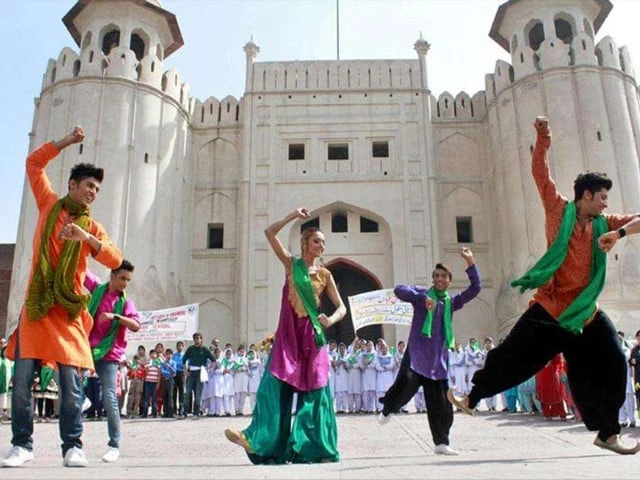
As International Dance Day was marked around the world, new listening trends suggest that in Pakistan, one rhythm is increasingly setting the pace: bhangra.
Data released by streaming platform Spotify indicates a sharp rise in the popularity of the high-energy genre, long associated with Punjabi culture but now gaining traction far beyond its traditional base.
Dance has always been central to celebrations in Pakistan from weddings and seasonal festivals to spontaneous moments tied to cricket victories. But recent figures suggest bhangra is becoming the dominant soundtrack to these occasions.
According to the data, streams of bhangra music in Pakistan have increased by more than 270% over the past three years. At the same time, the number of listeners engaging with the genre has grown by nearly 350%, pointing to a widening and more diverse audience.
The shift is also visible in how listeners organise their music. Playlists created by users featuring bhangra have risen significantly, suggesting that audiences are not just consuming the genre but actively curating it.
Lahore appears to be at the centre of this trend. Often described as the country’s cultural capital, the city has generated the highest number of bhangra streams, outpacing other major urban centres including Islamabad and Karachi.
However, the growth is not confined to large cities. Smaller regions are also contributing to the genre’s rise, with northern areas such as Gilgit seeing some of the fastest increases in listenership an indication that bhangra’s appeal is spreading geographically.
Classic tracks continue to play a key role in this resurgence. During the recent wedding season, “Nach Punjaban” by Abrar-ul-Haq was among the most streamed songs, highlighting the enduring popularity of established hits alongside newer releases.
While streaming data offers only one lens into cultural trends, it reflects a broader pattern in Pakistan’s music landscape where traditional sounds are being rediscovered and reinterpreted by a new generation of listeners.
In a country where music is closely tied to identity and celebration, bhangra’s growing prominence suggests that its beat is not only enduring, but evolving.
Bhangra has its origins from the historical Sialkot District which is considered to have its purest or standard version as well as neighboring districts of Gurdaspur, Gujranwala, Gujrat, and Shekhupura of the Majha. The community form of traditional bhangra has been maintained in Gurdaspur, where farmers performed bhangra to showcase a sense of accomplishment and to welcome the new harvesting season in pre-partition times, and has been maintained by people who have settled in Hoshiarpur, Punjab, India. Traditional bhangra is performed in a circle and is performed using traditional dance steps. Traditional bhangra is now also performed on occasions other than during the harvest season. According to Ganhar (1975), bhangra has been imported into Jammu which is danced on Baisakhi. Other Punjabi folk dances such as giddh? and lu??? have also been imported into Jammu, which shares Punjabi influences and an affinity with Punjab.
The 1950s saw the development of traditional bhangra in Punjab, which was patronized by the Maharaja of Patiala, who requested a staged performance of bhangra in 1953. The first significant developers of this style were a dance troupe led by brothers from the Deepak family of Sunam (Manohar, Avtar and Gurbachan) and dhol player Bhana Ram Sunami. Free form traditional bhangra developed during stage performances which incorporate traditional bhangra moves and also include sequences from other Punjabi dances, namely, Luddi, Jhummar, Dhamaal, and Gham Luddi. The singing of Punjabi folk songs, boliyan, are incorporated from Malwai Giddha. Bhangra competitions have been held in Punjab, India, for many decades, with Mohindra College in Patiala being involved in the 1950s.
Bhangra connects to a much deeper set of masculine values. Most of these values are set through labour, industry and self-sufficiency in agriculture, loyalty, independence and bravery in personal, political and military endeavours; and the development and expression of virility, vigour, and honour are common themes.