



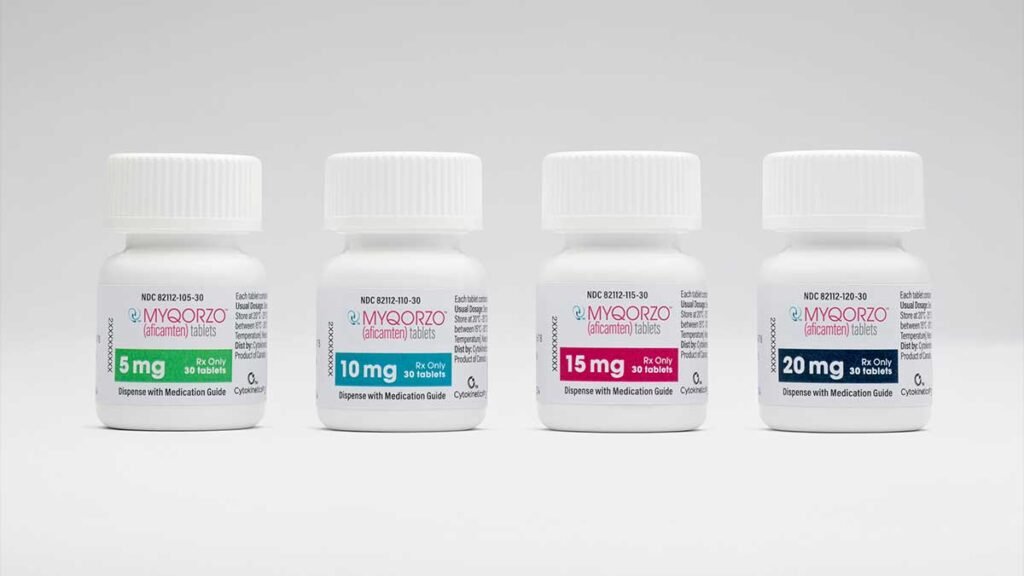
UK’s medicines regulator approved Cytokinetics’ drug Myqorzo for a rare heart condition on Thursday, with the country’s cost-effectiveness watchdog recommending it for NHS reimbursement, potentially reaching about 6,600 patients.
At the same time, the National Institute for Health and Care Excellence (NICE) recommended the drug for NHS reimbursement for eligible adults in England and Wales, paving the way for it to become available through the NHS.
Myqorzo treats obstructive hypertrophic cardiomyopathy (oHCM), a rare condition where the heart muscle becomes abnormally thick and can block blood flow to the body. Around 1 in 500 people in the UK has HCM, and in roughly half of cases it is inherited.
NICE’s recommendation covers adults with symptomatic oHCM classified as NYHA class II or III. The treatment can be used alongside standard therapies, or on its own when those medicines are unsuitable. NICE estimates around 6,600 patients could benefit.
How the new daily pill works
Myqorzo is a cardiac myosin inhibitor, the same drug class as Bristol Myers Squibb’s Camzyos. It works by targeting the heart muscle to reduce obstruction and improve how the heart pumps.
MHRA approval was supported by late-stage trial data showing patients treated with Myqorzo for 24 weeks had a statistically significant improvement in peak oxygen uptake — a key measure of exercise capacity — compared with placebo.
What this means for NHS patients
The coordinated MHRA approval and NICE recommendation mean eligible patients can now be prescribed the daily pill on the NHS without additional delays. The move also expands Myqorzo’s availability beyond the U.S., where the FDA approved the drug in December 2025.
For people with oHCM, treatment options have been limited. A daily oral therapy offers a new way to manage symptoms, improve exercise tolerance, and potentially reduce the need for invasive procedures.