
Tensions have arisen over the Lebanon operation, US sale of F-35 jets to Türkiye and public rebukes over differences
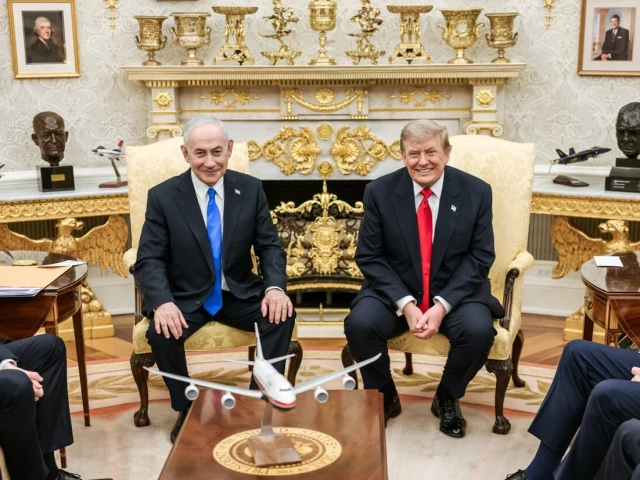
President Trump and Israeli Prime Minister Bibi Netanyahu pictured in the White House—TRUTH SOCIAL
When United States President Donald Trump and Israeli Prime Minister Benjamin Netanyahu launched joint military strikes against Iran in February, the two leaders appeared firmly aligned in both strategy and rhetoric, presenting a united front against what they described as Tehran’s nuclear threat.
Five months later, that unity has given way to increasingly public disagreements over military strategy, regional diplomacy and Washington’s broader Middle East policy.
Ahead of Netanyahu’s eighth visit to the White House since Trump returned to office, Axios reported that the Israeli premier arrived in Washington “weaker and less influential” than on previous trips, reflecting a relationship that has become visibly more strained despite the two leaders’ shared objective of preventing Iran from acquiring nuclear weapons.
Here is how the relationship shifted from wartime coordination to increasing disagreements.
February: United in launching war on Iran
On Feb 28, Trump and Netanyahu jointly announced military strikes against Iran, describing the operation as necessary to eliminate what they called an existential nuclear threat.
The two leaders vowed to prevent Tehran from obtaining nuclear weapons and projected complete unity during the opening phase of the conflict.
The joint strikes killed several senior Iranian figures, including former Supreme Leader Ali Khamenei and top military officials.
April: Trump pivots toward de-escalation
After weeks of fighting, Trump began shifting his focus toward diplomacy and urged Israel to scale back military operations, particularly in Lebanon. In a telephone interview with NBC News on April 9, Trump said he had personally asked Netanyahu to reduce Israeli strikes.
“I spoke with Bibi, and he’s going to low-key it. I just think we have to be sort of a little more low-key,” he said.
READ: Trump says Israel will be ‘scaling back’ attacks on Lebanon after appeal to Netanyahu
A week later, Trump went further, saying the US was actively preventing Israel from carrying out additional attacks in Lebanon as a ceasefire began to take hold.
“Israel will not be bombing Lebanon any longer. They are prohibited from doing so by the USA. Enough is enough!!” Trump wrote on his Truth Social platform.
Trump:
The U.S.A. will get all Nuclear “Dust,” created by our great B2 Bombers.
No money will exchange hands.
This deal is not subject to Lebanon, but the USA will separately work with Lebanon and deal with the Hezbollah situation.
Israel will not be bombing Lebanon any… pic.twitter.com/bbsvrscWBK
— Clash Report (@clashreport) April 17, 2026
Axios later reported that Israeli officials sought clarification from the White House over Trump’s assertion that Israel had been “prohibited” from conducting further airstrikes.
The shift marked one of the first visible differences between Washington and Tel Aviv over the conduct of the regional conflict.
June: Lebanon becomes flashpoint
Tensions escalated further in June as Israel intensified operations in Lebanon despite US efforts to reduce regional fighting.
According to Axios, Trump angrily confronted Netanyahu during a phone call, telling the Israeli leader: “You’re f*** crazy.”
Later that month, Trump told Axios that Netanyahu had “no f*** judgment” regarding Israel’s continued military operations as Washington edged closer to a ceasefire understanding with Iran.
Vice President JD Vance also criticised Israeli officials, saying Trump was the only head of state in the world who remained consistently sympathetic to Israel.
From the Israeli side, Defence Minister Israel Katz said that Israel would respond immediately and forcefully to any Iranian attack, adding that “no one can tell us what to do.”
July: Türkiye emerges as another point of disagreement
Differences widened further ahead of Netanyahu’s latest Washington visit when Trump publicly dismissed Israeli objections to possible US military sales to Türkiye.
Calling Türkiye “a tremendous ally” and describing President Recep Tayyip Erdogan as “a friend”, Trump rejected criticism over the potential sale of F-35 fighter jets.
“Nobody tells me what we should be selling,” Trump told reporters aboard Air Force One.
The comments were widely interpreted as a direct rebuke of Netanyahu’s efforts to influence US defence policy.
July: Public disagreement over Iran intelligence
Hours before meeting Netanyahu at the White House on Tuesday, Trump publicly dismissed reports that the Israeli leader planned to brief him on Iranian activity at Pickaxe Mountain.
Trump said he already knew “exactly” what was happening and suggested Netanyahu was raising the issue because he wanted Washington to remain militarily involved in Iran.
He also questioned why the matter had been discussed publicly instead of privately.
It was Trump’s second consecutive day publicly criticising Netanyahu before their meeting.
Growing differences over Iran
While both leaders continue to insist Iran must never acquire nuclear weapons, their preferred approaches have increasingly diverged.
Experts say that growing tensions between Trump and Netanyahu over the Iran war and Israel’s military operations in Lebanon are exposing one of the most serious strains in US-Israel relations in years.
In June, Israeli media reported that members of the Trump administration have held informal contacts with opposition figures, including former Prime Minister Naftali Bennett and former military chief Gadi Eisenkot, amid growing frustration with Netanyahu.
Trump has also shared articles highlighting his influence over Netanyahu’s political fortunes, fueling speculation about Washington’s willingness to increase pressure on the Israeli leader to back his rivals.
While Trump has reopened diplomatic channels with Tehran and kept the threat of renewed military action on the table, Netanyahu has continued urging Washington to maintain maximum pressure on Iran, arguing that Tehran remains determined to rebuild its nuclear capabilities.