
KARACHI:
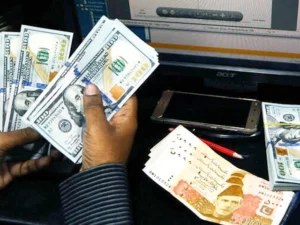
Pakistan’s rupee has appreciated by around Rs2 against the US dollar since the Middle East war began, maintaining its strength despite rising energy costs, geopolitical uncertainty and higher global yields.
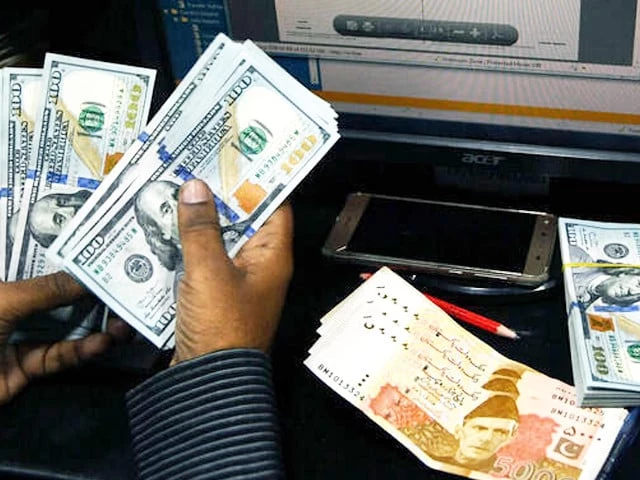
The Pakistani rupee, extending its modest upward trend against the US dollar, gained 0.01% in the inter-bank market on Monday and closed at Rs276.97 per dollar. It was up three paisa from Friday’s closing rate of Rs277/$. The currency’s gradual upward trajectory reflects a policy approach focused on accumulating foreign exchange, containing domestic demand and maintaining monetary restraint rather than relying on currency depreciation to absorb external shocks.
Pakistan made net foreign exchange purchases of $8.1 billion during fiscal year 2026, absorbing dollar supply in the inter-bank market and limiting the rupee’s potential appreciation, according to Tresmark Research.
However, foreign exchange reserves increased by only around $4 billion during the year, as approximately $11 billion went towards external debt servicing and repayments.
Pakistan’s external debt payments falling due within 12 months declined from more than $30 billion in June 2025 to around $24 billion by July 2026, following repayments, rollovers and refinancing.
The improved maturity profile, higher reserves and upgraded credit ratings have strengthened the country’s external position. However, these gains remain vulnerable to changes in energy prices, global financing conditions and foreign exchange inflows.
The rupee’s appreciation comes as Pakistan continues to struggle with weak exports. The real effective exchange rate (REER) has crossed 107, prompting concerns about the currency’s competitiveness.
Authorities maintain that the exchange rate alone cannot resolve structural weaknesses in exports. Currency depreciation could also increase the cost of imported energy and other goods, putting additional pressure on inflation.
The authorities remain cautious about recovering import demand and may consider further rate increases if external pressures intensify. Remittances have remained resilient, although slower labour migration to the Middle East could weigh on future inflows. Inflation is projected to ease towards 7% by June 2027. The rupee’s sustainability will ultimately depend on stronger exports, stable remittances, manageable energy costs and sufficient external financing.
Meanwhile, gold prices in Pakistan fell on Monday, tracking a decline in the international market, with the per-tola rate dropping Rs2,100 to Rs439,936.
According to the All-Pakistan Gems and Jewellers Sarafa Association, the price of 10-gram gold decreased by Rs1,800 to Rs377,174. On Saturday, gold had gained Rs1,100 to settle at Rs442,036 per tola. In the international market, gold prices fell by $21 to $4,174 per ounce. Silver prices also declined, shedding Rs23 to reach Rs6,532 per tola.
Adnan Agar, Director of Interactive Commodities, said gold was trading between $4,165 and $4,170 an ounce after touching the high of $4,217 and low of $4,155. He said the market remained under pressure, with prices repeatedly failing to sustain gains around $4,200 to $4,230.
“Gold will remain under pressure unless it breaks above the $4,240-$4,280 range,” Agar said.
On the downside, he said gold could find support near $4,100. However, the failure to rebound from that level could expose the market to further weakness. He added that gold had remained range bound between $4,050 and $4,240 for nearly a month.
Agar said rising US bond yields were weighing on gold prices. He also cautioned that a renewed conflict between the United States and Iran could put further downward pressure on the metal.