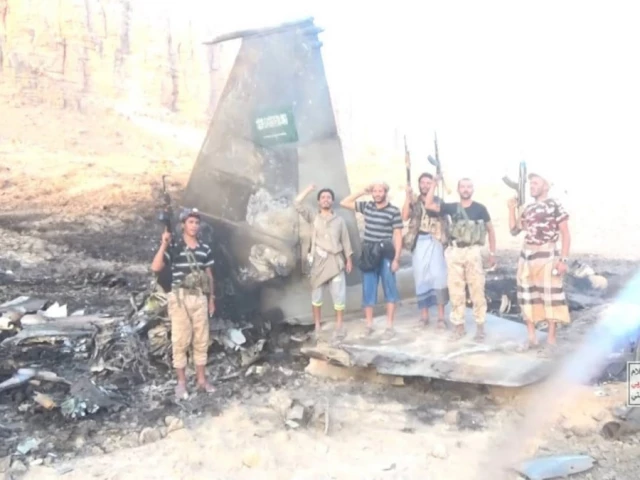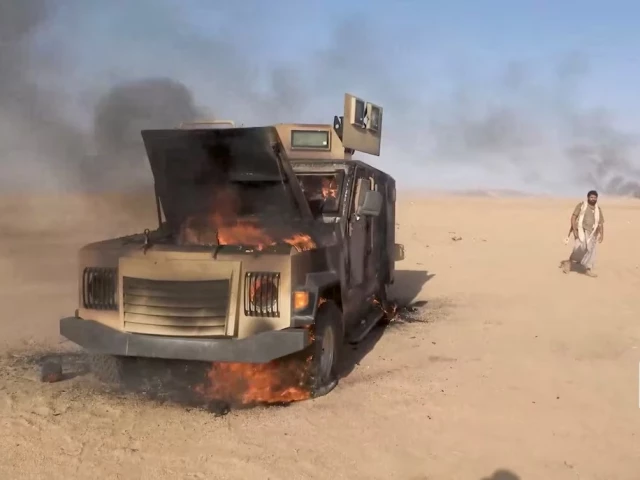

Houthi forces seize a sizeable cache of advanced US- and Saudi-supplied weapons after Saudi-backed forces retreated
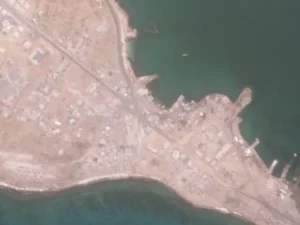
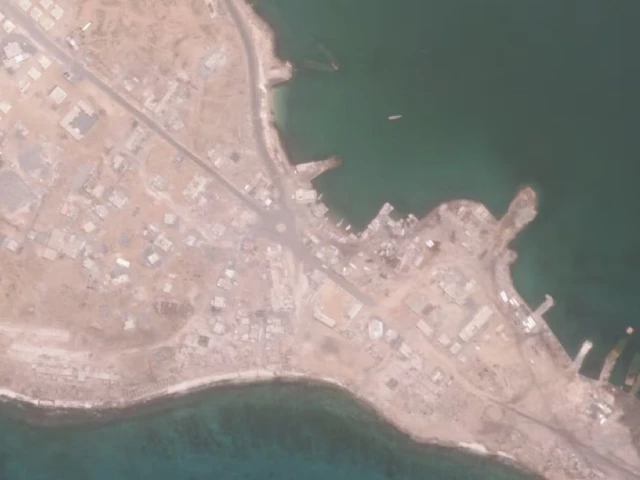
A satellite view shows a closer view of Perim Island in the Bab el-Mandeb Strait, Yemen, September 13, 2026. PHOTO: REUTERS
The Houthi capture of ground overlooking the Bab el-Mandeb Strait has dealt Saudi Arabia its gravest setback in Yemen in years, exposing intelligence failures, the collapse of Yemeni allies and the limits of US protection.
A Houthi advance this week along the Red Sea coast and the capture of islands at the mouth of the strait, a vital artery for global oil supplies, has also left the kingdom scrambling for backing as Iran and its allies expand their reach.
Senior Western, regional and Yemeni officials and sources said the Houthi breakthrough reflected various factors: deep divisions among anti-Houthi Yemeni factions, an untested Saudi-led command structure that replaced Emirati oversight, limited Saudi air support and an underestimation of Houthi preparations.
The diplomat said the Houthis had quietly assembled about 100,000 fighters, vastly outnumbering forces on the opposing side, adding: “Everyone, including the Saudis, missed this build-up and miscalculated the Houthis’ intentions.”
Neil Quilliam, a fellow at London’s Chatham House think tank, described the offensive as a glaring intelligence failure, saying: “They just weren’t picking up the signal. They just weren’t seeing the signs.”
Also Read: Saudis pound Yemen as Houthis solidify gains in new theatre of Middle East war
Yemeni political analyst Farea Al-Muslimi added: “The Saudis were caught off guard in Yemen.”
The collapse of Saudi-backed forces handed the Houthis another prize beyond territory — a sizeable cache of advanced US- and Saudi-supplied weaponry abandoned during the retreat.
The haul, according to regional sources, is likely to bolster the group’s military capabilities, provide valuable intelligence on adversaries’ equipment and further reinforce perceptions of a humiliating Saudi defeat.
“The Yemeni government forces were like a house of cards. They didn’t resist. Completely. Completely,” said Abdulkhaleq Abdallah, a political analyst in the United Arab Emirates.
The setback has also exposed how limited international support for a counteroffensive may be. Two Western officials said neither the United States nor European countries were prepared to offer direct military backing, and that Washington and its allies had not even joined a Saudi-led maritime defence coalition announced in July.
Saudi officials did not respond to a request to comment for this article.
Allies collapse, partners hesitate
With Iran-backed fighters now holding territory that can threaten Saudi oil exports and Red Sea shipping, Crown Prince Mohammed bin Salman (MBS) went to Cairo to seek help containing the fallout after Washington declined to intervene.
Two regional sources said Riyadh wanted Egypt to play a role in Red Sea operations, recalling Cairo’s intervention in 2015 when its naval and air forces helped secure Bab el-Mandeb. There was no immediate word on whether Cairo would agree.
Egypt’s Foreign Ministry did not immediately respond to a request for comment when asked whether MbS had asked for Egyptian military support.
The Houthis also appear to be using their gains to press for broader political concessions.
Former US negotiator Dennis Ross said the group wants Riyadh to lift restrictions on Hodeidah port and Sanaa airport, provide compensation for the war and scale back support for Yemen’s internationally recognised government.
“I don’t think the Saudis can easily give in to the kinds of demands that they’re making,” Ross said.
Read More: Saudi Arabia says Houthi drone intercepted near Makkah, group denies involvement
A Gulf official said Saudi Arabia now faced a narrowing set of choices. Allowing the Houthis to consolidate their gains risked turning tactical victories into lasting strategic leverage, while a larger military response could prompt attacks deeper inside the kingdom.
“If you don’t inflict enough pain on the Houthis, you become hostage to them,” the official said.
Control of territory around Bab el-Mandeb — which lies between Yemen on the Arabian Peninsula and Djibouti and Eritrea on the African coast — could deepen the Houthis’ regional reach, putting the Horn of Africa within easier reach of their logistical and smuggling networks.
Combined with Iran’s leverage over the Strait of Hormuz, another vital route for global energy supplies, the foothold gives Tehran and its allies influence over two critical maritime choke points.
MBS’s foreign policy strategy, built on trying to stabilise the region via a détente with Iran, has unravelled since the start of the US-Iran war as his economic transformation agenda comes under mounting strain, increasing pressure on the kingdom’s de facto ruler.
The absence of Western military assistance in Yemen, and the absence of these powers from a newly formed defence coalition, exposed the limits of its ability to rally support at a moment of acute vulnerability.
Riyadh appears increasingly to have been outmaneuvered by its adversaries and left wanting by its allies.
The Yemen trap
The Houthi offensive revealed a blind spot in Saudi and US strategy: while Washington and its allies focused on containing Iran directly, Tehran widened the battlefield by opening fronts from Iraq to the Red Sea, using energy assets, shipping routes and proxies as instruments of pressure.
The larger significance of the Houthi breakthrough lies not only in the blow to Saudi Arabia but in the momentum it restores to Iran’s influence across the region, after major setbacks to its allies in Gaza, Syria and Lebanon.
For Iran it’s a “win-win-win,” said Farea Al-Muslimi.
Some political analysts say the more consequential blow is not the battlefield reversal but Washington’s reluctance to come to its ally’s aid. That signal, they say, has emboldened adversaries, weakened Riyadh’s leverage and reinforced doubts over the reliability of US security guarantees.
Al-Muslimi described Washington’s refusal to help defend Saudi territory as “the biggest dismissing of the Saudi-American arrangement” in decades.
“The Americans are saying No,” he said. “That kind of understanding in the relationship between Riyadh and Washington has never been tested more than now.”
Yemen’s long record of defeating foreign powers – from Egypt in the 1960s to the Soviets and, more recently, the US and Saudi Arabia – helps explain why Riyadh’s search for partners may yield only limited results.
Few regional powers appear eager to be drawn deeper into a conflict that has repeatedly frustrated attempts at outside intervention and acquired a reputation as a graveyard for foreign military ambitions.
“Yemen is the Vietnam and Afghanistan of every power dragged into it,” Muslimi said, referring to conflicts in which foreign powers were humbled. “The Saudis failed in Yemen, the Americans failed in Yemen,” he said, adding in reference to Egypt’s costly intervention in Yemen in the 1960s: “The Egyptians failed in Yemen.”