



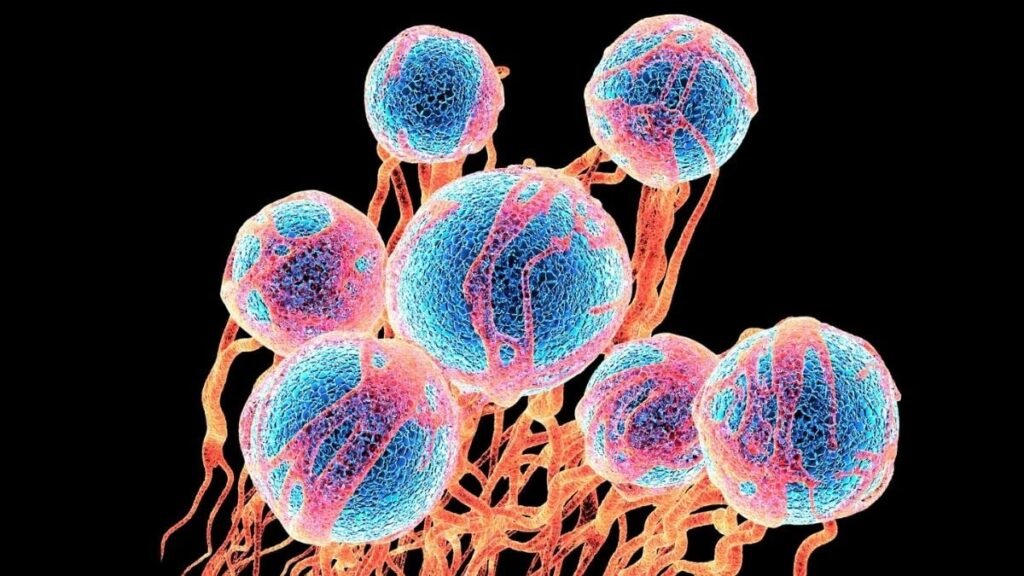
A new study suggests that a common dietary sugar may play a key role in helping aggressive ovarian cancer spread after chemotherapy.
Scientists at The Wistar Institute in Philadelphia have identified a link between fructose and the spread of ovarian cancer. Their findings, published in Nature Aging, point to a new way in which cells surviving treatment may help tumors grow and spread to other parts of the body.
Ovarian cancer is typically treated with powerful platinum-based chemotherapy drugs like cisplatin. While this approach often works initially, the disease frequently returns and spreads throughout the abdomen. This process, known as metastasis, is responsible for roughly 90 percent of deaths associated with the disease.
To investigate this, the researchers studied cancer cells that survive chemotherapy by entering a state known as cellular senescence. While these cells no longer divide, they remain active in the body.
“Some cancer cells that survive chemotherapy aren’t dividing anymore, but they’re still biologically active,” explained Aidan Cole, a molecular biologist at The Wistar Institute and the study’s lead author. “Instead, they continue to release molecules that send signals to nearby cells. Our study is among the first to show that a nutrient—in this case, fructose—can act as one of those signals”.
Lab experiments showed that senescent cells release high amounts of fructose. When nearby cancer cells take in this sugar, their metabolism changes and their cholesterol production drops. Since cholesterol helps keep cells together, this decrease makes it easier for cancer cells to detach and move to other parts of the body.
READ MORE: Prostate cancer drug shows promise in halting tumour growth and spread
The researchers also tested this process in mice. Animals given a high-fructose diet developed more widespread cancer growth than those fed a standard glucose diet.
Although these results are still in early stages, they could have important implications. Since high-fructose corn syrup is common in many diets, the researchers suggest that reducing sugary drinks and similar foods might one day help support cancer treatment and limit the spread of tumors.