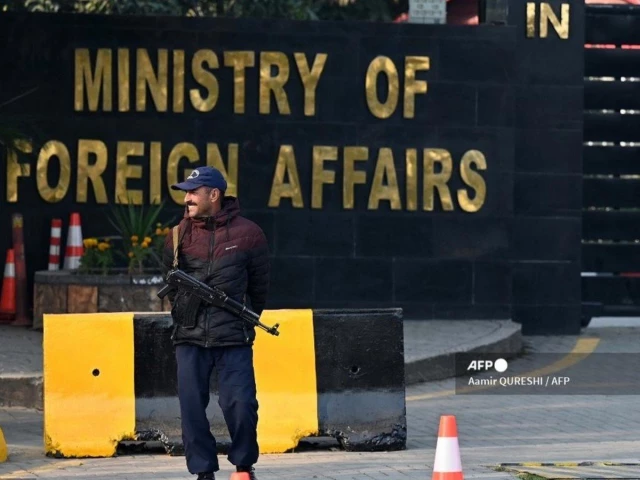
Technical-level talks between the United States and Iran will be held tomorrow in Burgenstock, Switzerland, under the framework of the “Islamabad Memorandum of Understanding”, the Foreign Office said on Saturday.
According to the statement, the discussions are a follow-up to the signing of the Islamabad Memorandum of Understanding (MoU).
Representatives from the United States and Iran will participate in the talks, along with mediators from Pakistan and Qatar, the statement added.
Pakistan has stated that it will continue to facilitate the process as a mediator in order to support progress toward the memorandum’s implementation.
🔊PR No.1️⃣4️⃣8️⃣/2️⃣0️⃣2️⃣6️⃣
Technical-Level Talks Under the Islamabad Memorandum of Understanding
🔗⬇️ pic.twitter.com/9FbJ4WB1Bp
— Ministry of Foreign Affairs – Pakistan (@ForeignOfficePk) June 20, 2026
The Swiss Foreign Ministry said Switzerland was providing a “discreet and reliable setting” in Burgenstock for talks on the implementation of the MoU.
“Diplomats from various countries currently present are continuing their efforts to maintain the dialogue,” a ministry statement said.
“For reasons of confidentiality, no further information can be provided regarding those present or the discussions,” it added.
Earlier, US Vice President JD Vance also said that high-level talks with Iran could take place as early as Sunday.
“We’ll plan the talks when the principals from the Iranian government, also the Qatari and the Pakistani governments, arrive,” Vance told Fox News, adding that this could happen “as soon as tomorrow”.
He said such processes “are always a little bit in flux” but confirmed that US envoys Jared Kushner and Steve Witkoff were already on the ground addressing “technical elements” of the negotiations.
🚨NEW: @VP JD Vance says talks are progressing, with the U.S. focused on preventing Iran from rebuilding its nuclear program, while maintaining leverage through economic and strategic pressure. WATCH: pic.twitter.com/0jUVN0z9Go
— FOX & Friends (@foxandfriends) June 20, 2026
Vance also expressed being “very confident” that Washington could sustain the current ceasefire despite any potential differences in strategic implementation.
The vice president indicated that he may travel to Switzerland in the coming days to personally participate in the negotiations, but added that the ongoing efforts were a “delicate coordination dance” involving various diplomatic protocols.
“The Qataris and the Pakistanis want to make sure that we do this in the right way,” he said.
He said US President Donald Trump extended an “outstretched hand”, implying that a fundamental shift in Tehran’s behaviour could result in a “different relationship” between the two countries.
He added that while Washington would benefit regardless of the outcome of negotiations, the next steps were “very much up to the Iranians”.
An Iranian delegation will also travel to Switzerland to follow up on and demand the implementation of the other side’s commitments, Iran’s Foreign Ministry said, according to Iranian Fars news agency.
🔴 سخنگوی وزارت خارجه: هیئت ایرانی برای پیگیری و مطالبۀ اجرای تعهدات طرف مقابل به سوئیس سفر خواهد کرد. https://t.co/idoeTIKEgq
— خبرگزاری فارس (@FarsNews_Agency) June 20, 2026
Foreign Ministry spokesman Esmaeil Baghaei said: “In Switzerland, we are set to press for the implementation of the other side’s commitments and determine how they intend to fulfil their obligations.”
🔴 سخنگوی وزارت خارجه: در سوئیس قرار است دربارۀ اجرای تعهدات طرف مقابل مطالبهگری داشته باشیم و مشخص شود آنها چطور میخواهند به تعهداتشان عمل کنند. https://t.co/A5fCLnkwHm
— خبرگزاری فارس (@FarsNews_Agency) June 20, 2026
“If part of the other side’s commitments is not implemented, the entire understanding will face difficulties,” Baghaei said, adding that Washington must take the necessary measures “as soon as possible or risk jeopardising the agreement”.
سخنگوی وزارت خارجه: اگر بخشی از تعهدات طرف مقابل اجرا نشود کلیت تفاهم دچار مشکل میشود
طرف مقابل باید هرچه سریعتر تدابیر لازم را به کار بگیرد وگرنه کلیت تفاهم دچار مشکل خواهد شد. https://t.co/J827kcekEY
— خبرگزاری فارس (@FarsNews_Agency) June 20, 2026
“We did not sign the commitment for it not to be implemented; our approach is commitment for commitment,” he confirmed.
ما تعهد را امضا نکردیم که اجرا نشود؛ رویکرد ما تعهد در برابر تعهد است.
اگر طرف مقابل ار اجرای تعهداتش سرباز بزند ایران هم با تدابیر لازم پاسخ خواهد داد.
— خبرگزاری فارس (@FarsNews_Agency) June 20, 2026
The Iranian official warned that Tehran would respond “with the necessary measures” if the “other side refuses to fulfil its commitments”.
On Wednesday evening, Trump and Iranian President Masoud Pezeshkian electronically signed the “Islamabad Memorandum of Understanding”, which is intended to pave the way for ending the war launched by Washington and Tel Aviv against Iran on February 28.
The US and Iran were set to hold direct talks in Switzerland on Friday to start a 60-day negotiation period, but Tehran postponed them to protest “continued” Israeli ceasefire violations in Lebanon.
After securing a ceasefire on April 8, Pakistan hosted the highest‑level direct talks between the two nations on April 12‑13 since they severed diplomatic ties in 1979.
US, Qatar discuss mechanism for release of frozen Iranian funds under new agreement: report
Separately, media reports said the US was working with Qatar on a mechanism that could make billions of dollars in frozen Iranian assets available for humanitarian spending under the recently signed agreement.
The plan, which is still being discussed and requires Iran’s approval, would initially grant access to $6 billion in Iranian funds held in Qatar, according to The Wall Street Journal.
Under the proposed arrangement, Qatar would permit purchases of food, medicine and other humanitarian goods ordered by Iran’s central bank, using money drawn from frozen Iranian assets, the report said.
The mechanism could serve as a model for handling other pools of Iranian funds frozen in countries, including China, India, Iraq and Qatar.
The report said Iran was seeking the release of part of an estimated $24 billion in blocked assets as soon as possible.
Under the agreement signed earlier this week, the US committed to making Iran’s frozen assets “fully available for use” and negotiating a mechanism for their release.
The funds would become available as long as Iran engaged productively in ongoing talks, the report said, citing a US official.
“Even limited asset releases function as both economic lifelines and political signals of de-escalation,” Sanam Vakil, Middle East director at Chatham House, told the newspaper.
She said such measures were among the few concrete incentives available to help Iran stabilise its currency and ease domestic economic pressure.
The arrangement would be separate from the revenue Iran is expected to earn from oil sales, which Washington agreed to allow following the signing of the agreement, according to the report.
It said discussions on the Qatar mechanism began in late May during talks in Doha involving Iranian Parliament Speaker Mohammad Bagher Qalibaf and other Iranian officials.
Critics of the agreement have argued that it provides economic benefits to Iran before major progress is made on its nuclear programme, while supporters say it could help support negotiations and reduce regional tensions.